Generic selectors
Exact matches only
Search in title
Search in content
Post Type Selectors
Generic selectors
Exact matches only
Search in title
Search in content
Post Type Selectors

Learn 5 phrases in Portuguese to impress native speakers

Learn 5 phrases in Portuguese to impress native speakers

Phrases in Portuguese is more than memorising vocabulary and grammar rules. It is also about connecting with people in a natural and authentic way. When you use expressions that Portuguese speakers use daily, you immediately stand out. Even with a basic level, using just a few key phrases can create a powerful impression. In this article, you will learn five essential Phrases in Portuguese that instantly impress native speakers. These phrases are simple, practical and easy to use in real conversations. More importantly, they show that you are learning the language with curiosity, confidence and cultural awareness. Let’s explore each phrases in Portuguese, understand when use and why it leaves such a positive impact 1. “Não faz mal.” — It’s okay / No problem This phrase is short, friendly and very commonly used in Portugal. Natives use it every day, especially in polite or slightly uncomfortable situations. Instead of saying a direct “it’s fine”, Portuguese speakers prefer “não faz mal”, which literally means it does no harm. Why learn phrases in Portuguese impresses natives Because it sounds incredibly natural.When you use it, people immediately notice you understand the tone and rhythm of the language. When to use it Example A: Desculpa, pensei que ias descer.B: Não faz mal! Simple. Polite. Native-like. 2. “É na boa.” — It’s all good / Don’t worry about it “É na boa” is a very natural and relaxed expression. You will often hear it among friends, colleagues or young adults. It is informal, but perfect for everyday interactions. Why this phrases in Portuguese impresses natives Because it shows you recognise informal register.Most learners speak either too formally or too literally. Using “é na boa” demonstrates cultural fluency. When to use it Example A: Posso enviar-te isso amanhã?B: Sim, é na boa! 3. “Deixa comigo.” — Leave it to me / I’ll handle it This expression is common in both Portugal and Brazil, and it shows confidence. It is helpful in work situations, customer service moments, group projects or domestic conversations. Why it impresses natives Because it sounds proactive and natural.Natives often use short commands instead of long explanations. Saying “deixa comigo” is quick, direct and very Portuguese. When to use it Example A: Quem trata da reserva do restaurante?B: Deixa comigo. 4. “Pois…” — A uniquely Portuguese way to agree “Pois” is difficult to translate because its meaning changes depending on the tone. It can mean “yes”, “indeed”, “exactly”, “right” or even express doubt. Mastering this little word impresses natives immediately. Why it impresses natives Because it is one of the most Portuguese words ever.Foreigners almost never use it correctly, so when you do, people pay attention. When to use it Examples A: O trânsito hoje está horrível.B: Pois… A: Ele não veio à reunião.B: Pois, já me disseram. This single word shows deep cultural awareness. 5. “Que giro!” — How cute! / How nice! In Portugal, “giro” means cute, lovely, nice or cool. It is a very popular expression, especially when reacting to something pleasant. Why it impresses natives Because the word is uniquely Portuguese (not used in Brazil with the same meaning).Using it shows you are learning European Portuguese, not generic Portuguese. When to use Phrases in Portuguese Example A: Olha esta foto do meu cão.B: Ah, que giro! How These Phrases in Portuguese Help You Sound Native Speaking a language is not only about vocabulary. It is also about rhythm, tone and cultural expression. These five phrases help you: When you use expressions that natives use daily, you stop sounding robotic and start sounding real. Tips to Use These Phrases in Portuguese Correctly To make the most of them: Consistency is key. The more you use them, the more natural your Portuguese becomes.

Portuguese for Beginners: Your First Steps to Speaking Fluently

Portuguese for Beginners

Portuguese for Beginners: Your First Steps to Speaking Fluently why Portuguese Is the Perfect Language to Learn Portuguese for Beginners starting a new language can feel intimidating — but Portuguese welcomes you with open arms.It’s one of the most beautiful and rhythmic languages in the world, spoken by over 260 million people across Europe, South America, Africa, and Asia. Learning Portuguese opens doors to new cultures, friendships, and professional opportunities. Whether you dream of exploring Lisbon’s historic streets or experiencing the warmth of Rio de Janeiro, learning Portuguese connects you directly with the soul of those places. And the best part? Portuguese is easier than you think. The Foundations: Portuguese for Beginners Every language begins with the same three pillars — listening, speaking, and understanding. If you’re a beginner, here’s the roadmap to start strong: 1. Learn the Sounds and Pronunciation about Portuguese for Beginners Portuguese has a musical rhythm. Begin by listening carefully to how native speakers pronounce each word.Focus on vowels like ã, õ, and é. They give Portuguese its distinctive melody.Try repeating simple words such as obrigado (thank you), bom dia (good morning), and amigo (friend). 2. Build a Core Vocabulary with Portuguese for Beginners You don’t need thousands of words to start speaking.Begin with 100 to 200 essential words that you’ll use daily — greetings, verbs, and expressions. For example: A strong base will help you understand and form simple sentences quickly. 3. Master Basic Grammar Naturally Forget memorising grammar tables! Instead, learn through examples.Start with simple sentence patterns like: This approach keeps you motivated and builds confidence from day one. Learn from Native Teachers for Faster Progress The fastest way to learn Portuguese correctly is to study with native speakers. Native teachers help you: At Portuguese Native, our certified tutors focus on real conversation. Each class is built around your goals — whether you’re learning for travel, work, or personal growth. You’ll practice speaking from the first lesson, not months later. Tips to Stay Motivated as a Beginner Learning a new language takes time — but motivation is the key that keeps you going. Here are a few tips to stay on track: Common Mistakes Beginners Should Avoid Everyone makes mistakes when learning a new language — but knowing them early helps you improve faster. Here are the most common ones: Avoiding these habits will make your journey smoother and more enjoyable. The Power of Practice: Portuguese for Beginners Fluency isn’t about knowing every rule — it’s about using the language naturally. Start small. Have short conversations with your teacher, practice greetings with locals, or leave comments in Portuguese on social media. Every real interaction builds confidence and fluency. At Portuguese Native, our students often start speaking comfortably after just a few weeks because we prioritise communication over theory. Resources to Support Your Learning Here are a few tools and ideas to complement your lessons: Combine these resources with professional lessons, and you’ll progress quickly. Final Thoughts: Portuguese for Beginners Learning Portuguese as a beginner is exciting — every new word feels like unlocking a piece of a beautiful culture. With the right mindset and guidance from native teachers, you can build real fluency step by step. Remember: you don’t need to be perfect to start speaking. You just need to start. At Portuguese Native, we help beginners grow from their first “Olá” to full, natural conversations. 👉 Begin your journey today — because every fluent speaker once started exactly where you are now.

Learn to Speak Portuguese with Confidence

Learn to Speak Portuguese with Confidence

Learn to Speak Portuguese with Confidence – Why Learning Portuguese Is a Life-Changing Experience? There are languages you study… and there are languages you feel. Portuguese belongs to the second group.It’s a language filled with emotion, rhythm, and stories — one that instantly connects you with people, places, and passions across the world. Spoken by more than 260 million people, Portuguese is the official language of nine countries, each with its own accent, traditions, and expressions. From Lisbon’s calm elegance to Rio’s joyful melodies, learning Portuguese allows you to explore not only a language but an entire world of culture. The First Step: Learn to Speak Portuguese with Confidence Many learners make the same mistake at the beginning — they wait until they “know enough” to start speaking. But fluency doesn’t come from waiting. It comes from doing. When you start learning Portuguese, focus on communication, not perfection. Don’t be afraid of mistakes — they are proof that you’re growing.Native speakers appreciate effort, and they’ll often help you find the right words. The faster you start speaking, the faster you’ll start thinking in Portuguese. Learn from Native Speakers — Your Shortcut to Fluency If your goal is to sound natural, learning from native speakers is essential.Native teachers help you understand not only the words, but the emotions and rhythm behind them. At Portuguese Native, all classes are taught by certified native tutors who focus on real communication, not memorisation. You’ll learn how people actually speak in Lisbon, Porto, or São Paulo — how they greet each other, express emotions, and use idioms that don’t appear in textbooks. This immersion-based learning style helps you build authentic pronunciation and cultural awareness from day one. The Secret Ingredient: Learn to Speak Portuguese with Confidence Fluency begins with your ears.When you listen to Portuguese daily, your brain starts recognising rhythm, sounds, and patterns naturally. Spend at least 15 minutes a day listening to native content — podcasts, audiobooks, or even songs. Don’t worry if you don’t understand every word at first. What matters is exposing your mind to the melody of the language. Soon, you’ll begin to anticipate what comes next — that’s how your brain starts to think in Portuguese. Build Confidence Through Daily Practice Speaking Portuguese confidently doesn’t happen overnight — but a few minutes of daily practice can change everything. Here’s a simple plan you can follow: Consistency is more important than duration. Ten focused minutes daily are worth more than two hours once a week. Embrace the Culture — Not Just the Grammar Grammar matters, but culture gives the language life. To sound like a native, you must also understand how Portuguese speakers feel and think.Watch movies, follow local influencers, cook traditional dishes, and learn about customs from Portugal or Brazil. When you connect with the culture, your vocabulary grows naturally — and your pronunciation begins to mirror the way natives express emotion. Language is not only about what you say, but how you say it. Why Portuguese Is Easier Than You Think Many learners believe Portuguese is difficult. The truth? It’s one of the easiest Romance languages for English or Spanish speakers to learn. The grammar is logical, pronunciation is consistent, and many words are similar to other European languages. For example: If you already speak another Latin-based language, Portuguese will feel familiar — like meeting an old friend who speaks in a new rhythm. Your Path to Fluency Starts Today Fluency is not just a goal — it’s a journey filled with discovery. Each new word brings you closer to people, culture, and confidence. With the right guidance, you can start speaking Portuguese naturally within weeks. At Portuguese Native, you’ll find: If you’ve ever dreamed of speaking a new language with elegance and emotion, Portuguese is waiting for you. Final Thoughts about Learn to Speak Portuguese with Confidence Portuguese is more than a language — it’s a bridge between cultures, a melody that invites connection, and a skill that can change your life. Start small, stay consistent, and surround yourself with Portuguese every day.Soon, you won’t just understand the words — you’ll feel them. Because when you learn with passion and practice with natives, you don’t just learn Portuguese…You learn to speak it with confidence, heart, and soul.

Learn Portuguese: A Journey Through Culture

Learn Portuguese A Journey Through Culture

A Journey Through Words That Breathe History Learn Portuguese: A Journey Through Culture – Walking through the Museu da Língua Portuguesa in São Paulo feels like stepping inside a living organism — one that speaks, sings, and tells stories through words.But the museum is more than a place; it’s a celebration of a language that unites over 260 million speakers across continents. From Lisbon to Luanda, from Rio de Janeiro to Maputo, Portuguese carries memories, traditions, and the rhythm of the people who speak it.As a traveler and teacher, I’ve always believed that language is a mirror of identity. Each Portuguese word hides an emotion, a nuance, a cultural gesture that often cannot be translated. Learn Portuguese: A Journey Through Culture – The Untranslatable Soul of Portuguese In fact, some Portuguese words are so deeply rooted in emotion that they resist translation altogether.If you’ve ever struggled to explain “saudade” to someone who doesn’t speak Portuguese, you’ll understand what I mean. The article 10 Portuguese Words You Can’t Translate to English beautifully explores this mystery.Words like “cafuné”, “desenrascar”, and “moleque” are more than vocabulary — they’re windows into how Portuguese speakers feel and live the world. Learning Portuguese, then, isn’t just about mastering grammar.It’s about discovering a worldview — one where warmth, nostalgia, and creativity flow together naturally. Language as Education and Opportunity In 2025, learning languages isn’t a luxury — it’s an investment in your global identity.Many students around the world dream of studying abroad, often facing barriers like education department student loans and expensive tuition fees. Yet, learning Portuguese can open unexpected doors.Whether you want to study in Brazil, work in Angola, or connect with the growing Portuguese-speaking communities in Europe, mastering the language gives you a bridge — cultural and professional. And the best part? You don’t need to spend thousands.Online education has made it possible to learn effectively and affordably. Where to Start Learning Portuguese -Learn Portuguese A Journey Through Culture If you’re ready to embark on this linguistic journey, start with high-quality resources designed for real learners.At Portuguese Native, you’ll find structured, interactive courses created by native speakers who understand how foreigners think and learn. Their lessons go beyond grammar — they teach context, emotion, and culture.You’ll hear real accents, explore idiomatic expressions, and build confidence in everyday conversation. The platform is ideal for: Why Portuguese Is More Than a Language Portuguese is often described as “a language of warmth” — soft, melodic, and deeply expressive.Each syllable flows like a wave, each phrase carries rhythm. As a teacher who’s traveled through Portugal’s narrow cobblestone streets and Brazil’s lively favelas, I can say: the language sounds different, but feels the same everywhere.It’s the sound of connection. The language’s evolution mirrors the history of its people — explorers, poets, and dreamers who left linguistic footprints across oceans.From the fado songs of Lisbon to the bossa nova melodies of Rio, Portuguese carries emotion like no other tongue. Bridging Continents: The Global Voice of Portuguese The Museum of the Portuguese Language calls it “a language that unites”, and it truly does.It’s one of the few languages officially spoken in countries across four continents.In Africa, it’s a symbol of unity and education; in Europe, tradition and sophistication; in South America, joy and creativity. The growing influence of Portuguese-speaking economies — Brazil, Angola, and Portugal — means that knowing the language also provides real-world advantages.Employers value multilingualism, and Portuguese ranks among the top 10 most influential languages for business. The Beauty of Continuous Learning One of the most inspiring lessons I’ve learned as a teacher is this:Language is never finished. Each conversation, each song, each mistake adds another layer to our understanding.Learning Portuguese is a process of immersion, not perfection — a journey where curiosity matters more than rules. If you treat learning as exploration rather than obligation, you’ll never stop discovering. Practical Tips to Learn Portuguese Faster – Learn Portuguese A Journey Through Culture Here are some methods that combine fun and efficiency: These habits create a natural learning environment — your personal “living museum” of language. Final Thoughts: Language as a Bridge, Not a Barrier Learn Portuguese: A Journey Through Culture is the Portuguese language is a reflection of human connection — shaped by centuries of discovery, migration, and imagination.It’s a language where one can say “obrigado” not just as “thank you,” but as “I am obliged to you” — a phrase full of humility and gratitude. Whether you’re exploring São Paulo’s Museum of the Portuguese Language or studying online from your living room, the experience is the same:You’re entering a world where words carry history, and history speaks through words. So next time you hear someone say “saudade”, don’t rush to translate it.Just feel it — because that’s the true beauty of learning Portuguese. Further Resources about Learn Portuguese: A Journey Through Culture

Master Portuguese Naturally Through Culture

Master Portuguese Naturally Through Culture

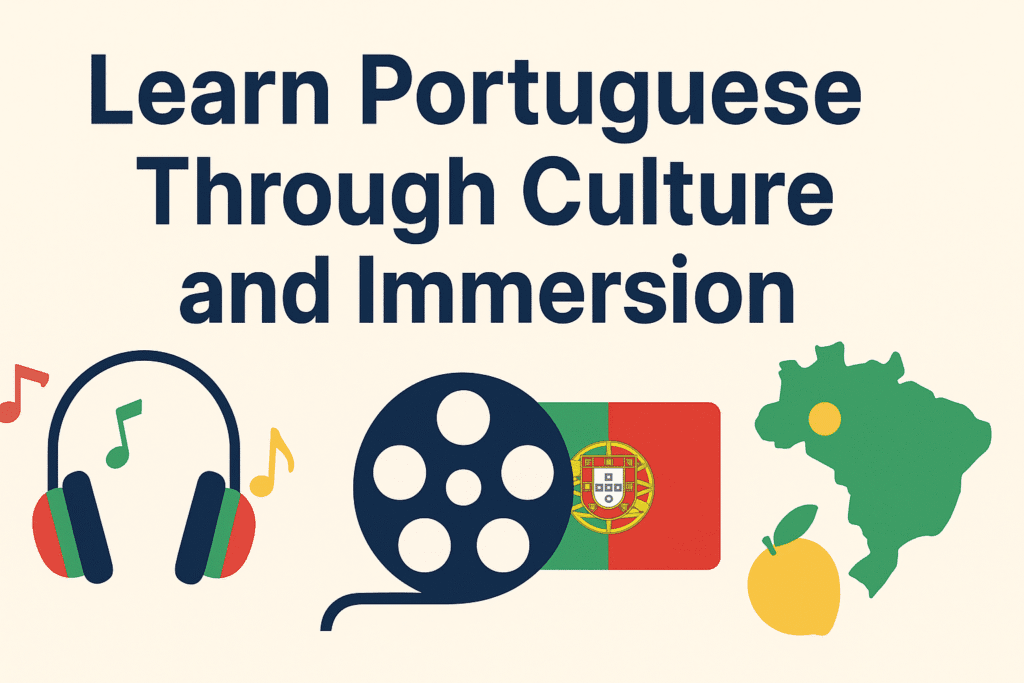
Master Portuguese Through Culture – Discover why learning through real Portuguese culture, not just grammar rules, transforms the way you speak Why Culture Is the Missing Piece in Your Portuguese Journey Master Portuguese Through Culture, Many learners start studying Portuguese with apps, grammar books, and vocabulary lists — and yet, months later, they still can’t hold a conversation. Why? Because language is not just words. It’s culture. If you want to sound natural, confident, and connected, you need to live the language, not just memorize it. That’s where cultural immersion — through music, films, stories, and traditions — changes everything. At PortugueseNative.com, we believe that true fluency happens when you understand not just what to say, but how and why native speakers say it. What “Learning Portuguese Through Culture” Really Means To learn Portuguese through culture and immersion is to experience the language as part of daily life. Instead of isolating words on a page, you encounter them in music, film, conversation, and traditions. Immersion isn’t only about travel (though that helps!). It’s about connecting with culture — even from your home. You can: Every time you experience the language in context, your brain builds deeper associations between sound, meaning, and emotion. To experience this, start exploring authentic resources like: Learn Portuguese Through Music Music is one of the most powerful cultural tools for language learning. Brazilian and Portuguese songs expose you to pronunciation, rhythm, and colloquial expressions that textbooks never teach. Example artists to explore: 🎧 Image suggestion: A vibrant illustration of headphones, Brazilian flag colors, and musical notes.Alt text: “Learn Portuguese through culture and immersion using Brazilian music.” When you sing along, your pronunciation and memory improve naturally. You internalize grammar patterns, build vocabulary, and strengthen your listening comprehension without effort. Learn Portuguese Through Movies and Series Films are another window into cultural immersion. Watching Brazilian or Portuguese productions allows you to observe accents, gestures, and cultural nuances that define the language. Recommended movies and series: While watching, keep subtitles on in Portuguese (not English). This keeps your brain immersed in the language. Repetition is key: rewatch scenes, mimic dialogue, and note idiomatic phrases. You can explore more of these unique words and cultural nuances in our feature on Vocal Media: “10 Beautiful Portuguese Words You Can’t Translate into English. Cultural Immersion Builds True Fluency) Why does learning Portuguese through culture and immersion work better than traditional study? Because it replicates how your brain naturally learns languages — through pattern recognition and emotional connection. When you learn through culture: Unlike rote memorization, immersion involves the heart as much as the mind. You stop studying and start living the language. Real-Life Practice: The Key to Retention Even if you can’t live in Portugal or Brazil, you can recreate immersion digitally.Here are practical ways to learn Portuguese through culture and immersion daily: Travel virtually.Watch travel vlogs or documentaries about Portuguese-speaking destinations. Change your phone and apps to Portuguese.You’ll learn dozens of new words each day. Join language exchange groups online.Try Tandem or HelloTalk. Follow blogs and creators like Portuguese Native for real examples. Cook Portuguese or Brazilian recipes.Reading and following recipes in Portuguese builds real-world vocabulary. How You Can Start Today By combining culture, structure, and consistent practice, you’ll speak Portuguese faster — and enjoy the process. Subtle Grammar and Pronunciation Gains When you learn Portuguese through culture and immersion, grammar becomes natural. You start noticing how sentences are formed in real conversations or songs.For example, after hearing “Eu vou te ligar mais tarde” (I’ll call you later) repeatedly in a song, you subconsciously understand object placement rules without memorizing them. Similarly, pronunciation improves through exposure. By listening to authentic Portuguese daily, your ear adjusts to sounds like “lh” (melho), “ão” (pão), or “r” (carro). Why Traditional Study Alone Isn’t Enough Memorizing rules and vocabulary lists has value—but only when paired with culture. Traditional study builds awareness, but immersion builds instinct. Many learners struggle with fluency not because they lack knowledge, but because they’ve never connected emotionally to the language.Culture provides that missing piece — making every word meaningful. Start Your Journey Today – Master Portuguese Naturally Through Culture If you’re ready to learn Portuguese through culture and immersion, start small but consistent.Watch a short film, learn the lyrics to a song, or read an article from Portuguese Native. Each small interaction adds up to natural fluency — no stress, no translation, just connection. Conclusion of Master Portuguese Naturally Through Culture Learning Portuguese through culture isn’t a shortcut — it’s the natural path to fluency.The more you connect with real Portuguese life — through art, music, humor, and emotion — the easier it becomes to express yourself with confidence and authenticity. So next time you open your textbook, balance it with a little rhythm, cinema, or poetry.Because the secret to fluency isn’t just study — it’s immersion. 👉 Explore lessons and resources at Portuguesenative.com and start living the language today.

The best Portuguese language teaching website

CONTACT
COURSES

Copyright © 2025 Portuguese Native. All rights reserved.