Portuguese Course for Children

Learning a new language during childhood is one of the greatest gifts parents can offer. Children absorb sounds, rhythms, and words quickly, which makes this stage ideal for acquiring Portuguese. Because of this natural ability, enrolling a child in a Portuguese course for children can open doors to culture, communication, and future opportunities. In this article, you’ll discover why Portuguese is a powerful language, how kids learn best, and what makes a children-focused programme truly effective. By the end, you’ll also find practical tips so parents can support learning at home. Why Choose a Portuguese Course for Children? Many parents want their children to grow up bilingual, and Portuguese is an excellent choice. After all, it is spoken by more than 260 million people worldwide. Above all, learning Portuguese strengthens cognitive skills and improves memory. In addition, children who start learning early show better pronunciation and a more natural flow. This advantage makes the learning journey easier and much more enjoyable. Furthermore, Portuguese connects children to rich cultures such as Portugal, Brazil, Angola, Mozambique, and Cape Verde. Through stories, music, and games, children not only learn words but also understand the diversity of the Lusophone world. How Children Learn Portuguese Naturally Children learn differently from adults. They need play, repetition, and emotional connection. Therefore, the most successful courses use: 1. Play-Based Learning Games, songs, and storytelling help children understand new words without pressure. This approach keeps learning light and fun. 2. Visual and Sensory Activities Flashcards, pictures, drawings, and real objects strengthen memory. Kids learn faster when they can see, touch, or act out words. 3. Short and Engaging Lessons with Portuguese Course for Children Children maintain focus for short periods. For this reason, the best Portuguese courses keep lessons dynamic and varied. 4. Immersive Communication Speaking Portuguese from the first lesson helps children build natural confidence. Simple phrases like “Como te chamas?” or “Queres brincar?” make them participate actively. What to Look for in a Portuguese Course for Children Choosing the right programme matters. A quality course includes: ✔ Native or Fluent Teachers Teachers with natural pronunciation help children develop correct sounds early. ✔ Age-Appropriate Activities Young learners need different methods from teenagers. The course should match cognitive development. ✔ Online and Interactive Options Platforms such as Preply, Lingopie Kids, and Portuguese Native offer personalised online lessons that make learning flexible and accessible. ✔ Cultural Integration Stories, cartoons, children’s songs, and celebrations enrich the experience. ✔ Progress Tracking Parents need clear feedback, simple assessments, and reports that show improvement. Key Benefits of Learning Portuguese Course for Children When a child takes a Portuguese course, they gain advantages that go beyond grammar. 🌟 1. Better Academic Performance Studies show that bilingual children develop stronger problem-solving and multitasking skills. 🌟 2. Improved Communication Skills They become better listeners and more confident speakers. 🌟 3. Cultural Awareness Portuguese exposes them to new foods, music, stories, and traditions. 🌟 4. Future Career Opportunities Growing up bilingual opens doors to international jobs and travel. 🌟 5. Stronger Brain Development Learning languages boosts memory, attention, and creativity. Simple Portuguese Phrases for Children to Start Using Here are some beginner-friendly phrases kids love: Including pronunciation makes learning easier: Children enjoy repeating sounds, so start with daily routines and simple dialogues. Best Online Platforms for Kids Learning Portuguese Because parents want flexible options, many choose online lessons. Some recommended platforms include: ⭐ Preply One-to-one lessons with child-friendly tutors. ⭐ Portuguese Native A platform focused on European Portuguese and brazilian portuguese, offering structured lessons and fun activities. ⭐ LingoPie Kids Children learn through cartoons in Portuguese. ⭐ YouTube Educational Channels Channels with songs, stories, and vocabulary help reinforce learning for free. How Parents Can Help at Home with Portuguese Course for Children Even small actions make a big difference. For example: In this way, learning becomes natural and continuous. Conclusion: Portuguese Course for Children A Portuguese course for children does more than teach vocabulary. It creates confidence, expands cultural awareness, and strengthens the brain. With fun activities, interactive lessons, and consistency, any child can learn Portuguese naturally. Whether you choose online classes or in-person lessons, the key is to keep learning playful and positive. Because when children enjoy the journey, fluency becomes a natural result. Schedule a live class with Portuguese Course for Children
Learn 5 phrases in Portuguese to impress native speakers

Phrases in Portuguese is more than memorising vocabulary and grammar rules. It is also about connecting with people in a natural and authentic way. When you use expressions that Portuguese speakers use daily, you immediately stand out. Even with a basic level, using just a few key phrases can create a powerful impression. In this article, you will learn five essential Phrases in Portuguese that instantly impress native speakers. These phrases are simple, practical and easy to use in real conversations. More importantly, they show that you are learning the language with curiosity, confidence and cultural awareness. Let’s explore each phrases in Portuguese, understand when use and why it leaves such a positive impact 1. “Não faz mal.” — It’s okay / No problem This phrase is short, friendly and very commonly used in Portugal. Natives use it every day, especially in polite or slightly uncomfortable situations. Instead of saying a direct “it’s fine”, Portuguese speakers prefer “não faz mal”, which literally means it does no harm. Why learn phrases in Portuguese impresses natives Because it sounds incredibly natural.When you use it, people immediately notice you understand the tone and rhythm of the language. When to use it Example A: Desculpa, pensei que ias descer.B: Não faz mal! Simple. Polite. Native-like. 2. “É na boa.” — It’s all good / Don’t worry about it “É na boa” is a very natural and relaxed expression. You will often hear it among friends, colleagues or young adults. It is informal, but perfect for everyday interactions. Why this phrases in Portuguese impresses natives Because it shows you recognise informal register.Most learners speak either too formally or too literally. Using “é na boa” demonstrates cultural fluency. When to use it Example A: Posso enviar-te isso amanhã?B: Sim, é na boa! 3. “Deixa comigo.” — Leave it to me / I’ll handle it This expression is common in both Portugal and Brazil, and it shows confidence. It is helpful in work situations, customer service moments, group projects or domestic conversations. Why it impresses natives Because it sounds proactive and natural.Natives often use short commands instead of long explanations. Saying “deixa comigo” is quick, direct and very Portuguese. When to use it Example A: Quem trata da reserva do restaurante?B: Deixa comigo. 4. “Pois…” — A uniquely Portuguese way to agree “Pois” is difficult to translate because its meaning changes depending on the tone. It can mean “yes”, “indeed”, “exactly”, “right” or even express doubt. Mastering this little word impresses natives immediately. Why it impresses natives Because it is one of the most Portuguese words ever.Foreigners almost never use it correctly, so when you do, people pay attention. When to use it Examples A: O trânsito hoje está horrível.B: Pois… A: Ele não veio à reunião.B: Pois, já me disseram. This single word shows deep cultural awareness. 5. “Que giro!” — How cute! / How nice! In Portugal, “giro” means cute, lovely, nice or cool. It is a very popular expression, especially when reacting to something pleasant. Why it impresses natives Because the word is uniquely Portuguese (not used in Brazil with the same meaning).Using it shows you are learning European Portuguese, not generic Portuguese. When to use Phrases in Portuguese Example A: Olha esta foto do meu cão.B: Ah, que giro! How These Phrases in Portuguese Help You Sound Native Speaking a language is not only about vocabulary. It is also about rhythm, tone and cultural expression. These five phrases help you: When you use expressions that natives use daily, you stop sounding robotic and start sounding real. Tips to Use These Phrases in Portuguese Correctly To make the most of them: Consistency is key. The more you use them, the more natural your Portuguese becomes.
Master Portuguese Naturally Through Culture

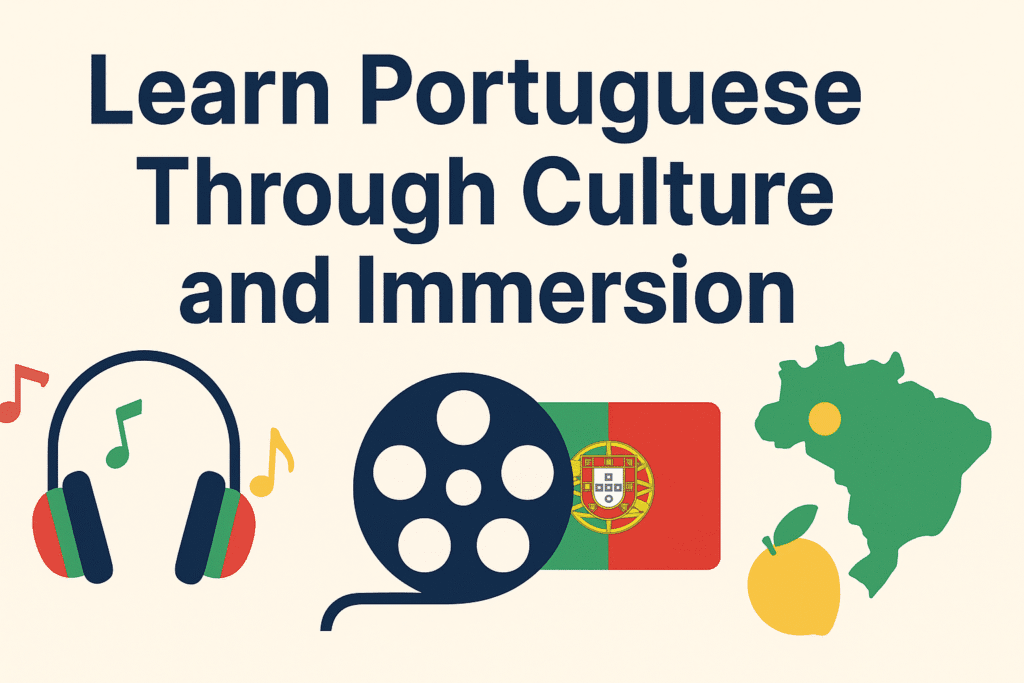
Master Portuguese Through Culture – Discover why learning through real Portuguese culture, not just grammar rules, transforms the way you speak Why Culture Is the Missing Piece in Your Portuguese Journey Master Portuguese Through Culture, Many learners start studying Portuguese with apps, grammar books, and vocabulary lists — and yet, months later, they still can’t hold a conversation. Why? Because language is not just words. It’s culture. If you want to sound natural, confident, and connected, you need to live the language, not just memorize it. That’s where cultural immersion — through music, films, stories, and traditions — changes everything. At PortugueseNative.com, we believe that true fluency happens when you understand not just what to say, but how and why native speakers say it. What “Learning Portuguese Through Culture” Really Means To learn Portuguese through culture and immersion is to experience the language as part of daily life. Instead of isolating words on a page, you encounter them in music, film, conversation, and traditions. Immersion isn’t only about travel (though that helps!). It’s about connecting with culture — even from your home. You can: Every time you experience the language in context, your brain builds deeper associations between sound, meaning, and emotion. To experience this, start exploring authentic resources like: Learn Portuguese Through Music Music is one of the most powerful cultural tools for language learning. Brazilian and Portuguese songs expose you to pronunciation, rhythm, and colloquial expressions that textbooks never teach. Example artists to explore: 🎧 Image suggestion: A vibrant illustration of headphones, Brazilian flag colors, and musical notes.Alt text: “Learn Portuguese through culture and immersion using Brazilian music.” When you sing along, your pronunciation and memory improve naturally. You internalize grammar patterns, build vocabulary, and strengthen your listening comprehension without effort. Learn Portuguese Through Movies and Series Films are another window into cultural immersion. Watching Brazilian or Portuguese productions allows you to observe accents, gestures, and cultural nuances that define the language. Recommended movies and series: While watching, keep subtitles on in Portuguese (not English). This keeps your brain immersed in the language. Repetition is key: rewatch scenes, mimic dialogue, and note idiomatic phrases. You can explore more of these unique words and cultural nuances in our feature on Vocal Media: “10 Beautiful Portuguese Words You Can’t Translate into English. Cultural Immersion Builds True Fluency) Why does learning Portuguese through culture and immersion work better than traditional study? Because it replicates how your brain naturally learns languages — through pattern recognition and emotional connection. When you learn through culture: Unlike rote memorization, immersion involves the heart as much as the mind. You stop studying and start living the language. Real-Life Practice: The Key to Retention Even if you can’t live in Portugal or Brazil, you can recreate immersion digitally.Here are practical ways to learn Portuguese through culture and immersion daily: Travel virtually.Watch travel vlogs or documentaries about Portuguese-speaking destinations. Change your phone and apps to Portuguese.You’ll learn dozens of new words each day. Join language exchange groups online.Try Tandem or HelloTalk. Follow blogs and creators like Portuguese Native for real examples. Cook Portuguese or Brazilian recipes.Reading and following recipes in Portuguese builds real-world vocabulary. How You Can Start Today By combining culture, structure, and consistent practice, you’ll speak Portuguese faster — and enjoy the process. Subtle Grammar and Pronunciation Gains When you learn Portuguese through culture and immersion, grammar becomes natural. You start noticing how sentences are formed in real conversations or songs.For example, after hearing “Eu vou te ligar mais tarde” (I’ll call you later) repeatedly in a song, you subconsciously understand object placement rules without memorizing them. Similarly, pronunciation improves through exposure. By listening to authentic Portuguese daily, your ear adjusts to sounds like “lh” (melho), “ão” (pão), or “r” (carro). Why Traditional Study Alone Isn’t Enough Memorizing rules and vocabulary lists has value—but only when paired with culture. Traditional study builds awareness, but immersion builds instinct. Many learners struggle with fluency not because they lack knowledge, but because they’ve never connected emotionally to the language.Culture provides that missing piece — making every word meaningful. Start Your Journey Today – Master Portuguese Naturally Through Culture If you’re ready to learn Portuguese through culture and immersion, start small but consistent.Watch a short film, learn the lyrics to a song, or read an article from Portuguese Native. Each small interaction adds up to natural fluency — no stress, no translation, just connection. Conclusion of Master Portuguese Naturally Through Culture Learning Portuguese through culture isn’t a shortcut — it’s the natural path to fluency.The more you connect with real Portuguese life — through art, music, humor, and emotion — the easier it becomes to express yourself with confidence and authenticity. So next time you open your textbook, balance it with a little rhythm, cinema, or poetry.Because the secret to fluency isn’t just study — it’s immersion. 👉 Explore lessons and resources at Portuguesenative.com and start living the language today.