
Portuguese garden vocabulary. Welcome to a small, cozy garden tour that doubles as a simple Portuguese vocabulary lesson. Picture a quiet backyard where a rocking chair and a parasol invite you to rest, where tools and flowers sit ready for the season, and where small moments—like a bee landing on the lawnmower—make the space feel alive. Below you’ll find useful words, short phrases you can practice, and a few little cultural touches to help these expressions stick.
Quick tour: What’s in the garden?
Think of this as a gentle walk around the garden. Use these key words to describe familiar objects and actions in Portuguese and English.
- o meu jardim — my garden
- a cadeira de baloiço — the rocking chair
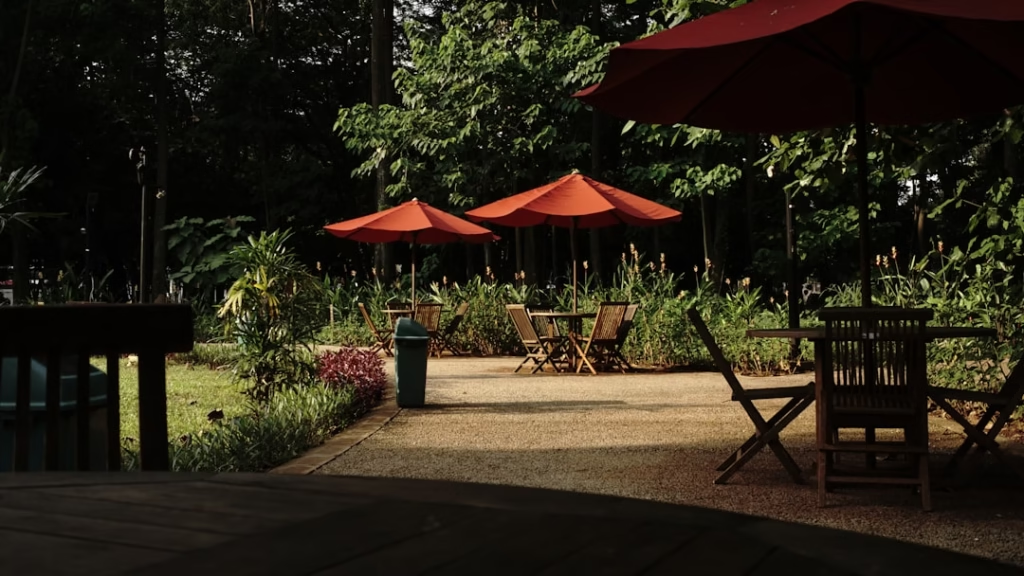
- o guarda-sol — the parasol
- o banco — the bench
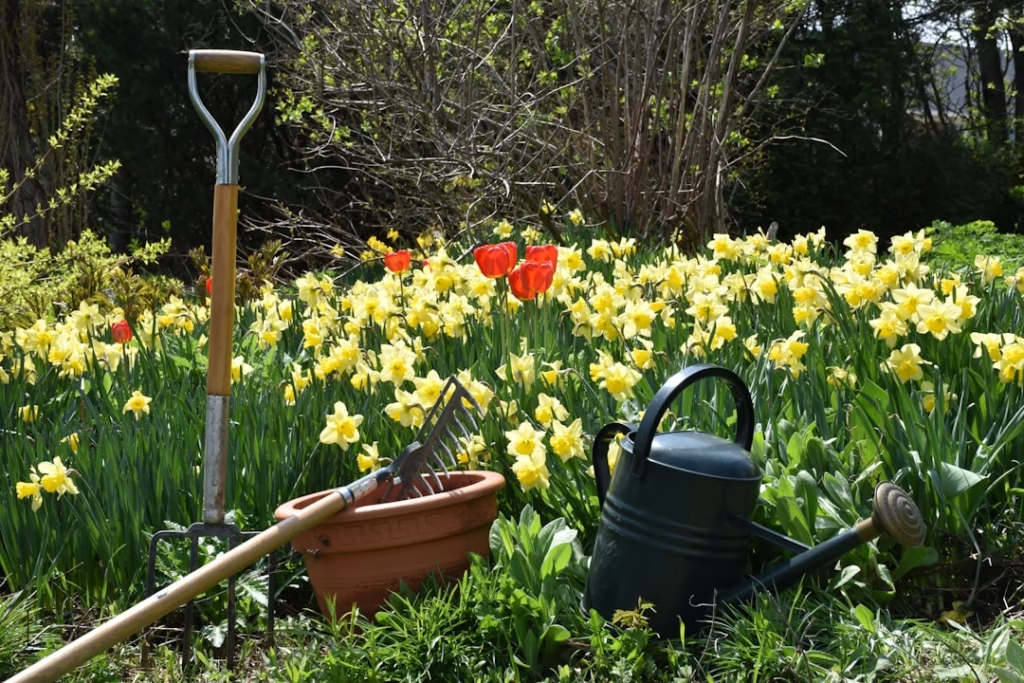
- o ancinho — the rake
- o regador — the watering can
- as macieiras — apple trees
- a colmeia — the beehive
- o grelhador — the grill
- a mangueira de jardim — the garden hose
- as tulipas, as rosas — tulips, roses
- o corta-relva — the lawnmower
- um banco de flores / canteiro — a flower bed
- os cravos — carnations
- os girassóis — sunflowers
- o trigo — wheat
- a sebe — the hedge
Schedule a trial class with me

Practical phrases you can use with Portuguese garden vocabulary
Short, everyday sentences help connect vocabulary to real situations. Say them out loud to practice pronunciation and rhythm.
- Bem-vindo ao meu jardim! — Welcome to my garden!
- Sinto-me muito confortável aqui. — I feel very comfortable here.
- A minha coisa favorita é sentar-me na minha cadeira de baloiço. — My favorite thing is to sit in my rocking chair.
- O guarda-sol protege-me do sol. — The parasol protects me from the sun.
- Quando vieres visitar-me, podes sentar-te lá. — When you come to visit, you can sit there.
- Preciso da mangueira de jardim para as flores. — I need the garden hose for the flowers.
- Plantei trigo por trás delas. Talvez eu devesse cozer pão com ele. — I planted wheat behind them. Maybe I should bake bread with it.
Flower notes and seasonal tips in Portuguese garden vocabulary
Gardens are full of seasonal rhythms. A few small gardening ideas tied to the vocabulary above:
- Sunflowers in spring — Sunflowers grow quickly and are a cheerful spring/summer planting. In Portuguese: Vês estes girassóis? Eu plantei essas flores na primavera.
- Tulips and roses — Plant bulbs like tulips in the fall for spring blooms; roses need steady watering and pruning.
- Planting wheat — Growing a small patch of wheat can be a fun experiment. Harvesting and milling into flour is a slow but rewarding process.
- Missing names — It’s okay to forget a flower’s name. Asking a family member or using a plant identification app are both great solutions.
Tools, animals, and small scenes in Portuguese garden vocabulary
Every garden has tools and little life moments that create stories. Use these lines to practice describing action and presence.
- Está um ancinho lá hoje. — There is a rake there today.
- Há uma abelha no meu corta-relva. — There is a bee on my lawnmower.
- Uma colmeia está presa numa das árvores. — A beehive hangs from one of the trees.
- Este é o meu novo grelhador. Gostas de fazer churrascos? — This is my new grill. Do you like to barbecue?
Conversation practice about Portuguese garden vocabulary
Try turning vocabulary into quick questions and answers. Practicing interactions is one of the fastest ways to remember words.
- Q: Também tens um jardim? — Do you have a garden too?
- A: Sim. Tenho um pequeno canteiro com ervas e tomates. — Yes. I have a small bed with herbs and tomatoes.
Memory and meaning
Gardens often carry memories. Mentioning a grandparent who knew all the flowers gives the space warmth and history. Use similar lines to connect language practice with personal stories—it’s memorable and meaningful.
É uma pena que a minha avó já não esteja viva. A minha avó conhecia todos os tipos de flores! — It is a shame that my grandmother is no longer alive. My grandmother knew all the types of flowers!
Simple practice routine (5 minutes)
- Pick five vocabulary words from the list above.
- Say each Portuguese word, then its English translation, three times.
- Make one sentence with each word. Keep sentences short and natural.
- Repeat the sentences out loud before bed or while watering plants.
Closing thought
A garden is a perfect language classroom: full of objects, actions, seasons, and memories. Use the phrases and vocabulary above to talk about what you see, what you do, and who you remember. Little, consistent practice turns simple sentences into lasting fluency.