Generic selectors
Exact matches only
Search in title
Search in content
Post Type Selectors
Generic selectors
Exact matches only
Search in title
Search in content
Post Type Selectors

The Entire History of the Portuguese Empire: From Ceuta to Macau

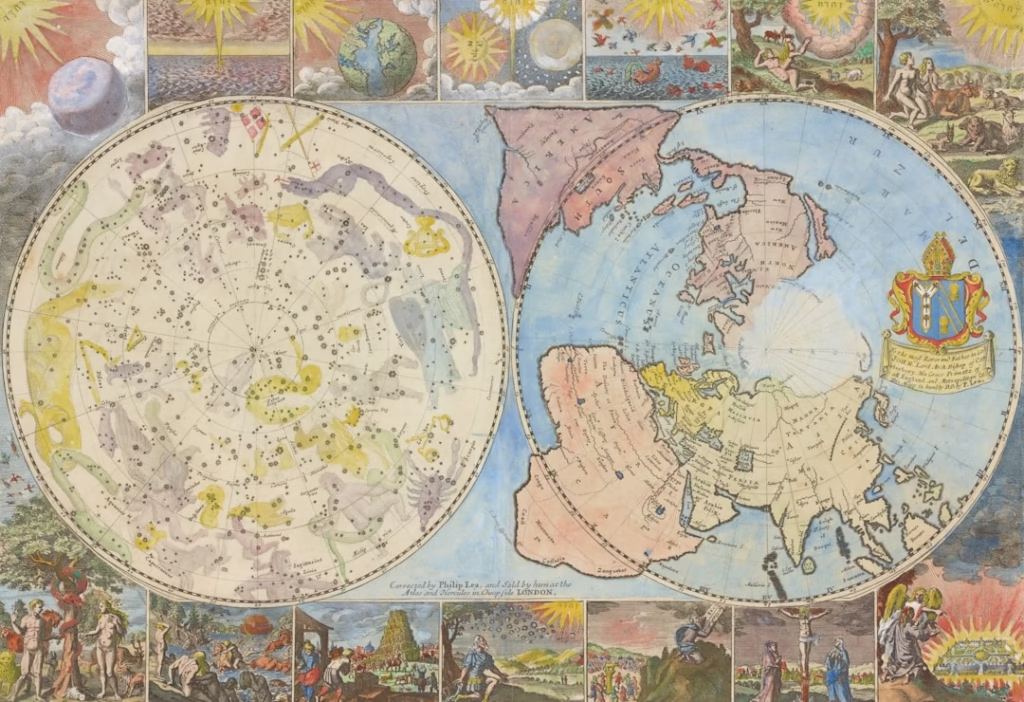
History of the Portuguese Empire. A tiny kingdom on Europe’s Atlantic edge transformed the map of global trade. Between the capture of Ceuta in 1415 and the handover of Macau in 1999, Portugal built one of history’s longest-lived maritime empires. Its sailors charted new sea routes, linked continents, and created commercial networks that shaped the modern world—while also leaving a legacy of violence, forced labor, and contested sovereignty. How a small kingdom looked seaward Portugal’s expansion began after the Reconquista, when the country’s borders were secured by the mid 13th century. With further conquest on the Iberian Peninsula off the table, Portuguese ambition turned to the sea. The capture of Ceuta in 1415 was the first outward step. Rather than simply prolonging the Christian–Muslim conflict on land, Ceuta became a logistical base for Atlantic exploration and trade. The country’s early maritime policy was championed by Prince Henry the Navigator. Using advances in navigation, ship design such as the caravel, and an appetite for charting unknown waters, Portuguese mariners explored the Atlantic archipelagos (Madeira, Azores), probed down the West African coast, and slowly pushed past previously feared obstacles like Cape Bojador. From rounding the Cape to reaching India Portuguese seafarers achieved two world-changing feats in the late 15th century. In 1488 Bartolomeu Dias rounded the southern tip of Africa and entered the Indian Ocean, proving a sea route east existed. In 1494 Portugal and Spain agreed to divide the newly discovered world with the Treaty of Tordesillas—a meridian that granted lands to the east to Portugal and to the west to Spain. Vasco da Gama’s voyage (departed 8 July 1497) realized the long-sought direct maritime route to Asia when he reached India in May 1498. That route opened European access to lucrative spice markets and laid the foundation for a chain of fortified ports across Africa and Asia. Key early expansions and discoveries about History of the Portuguese Empire Trade networks, forts, and the instruments of empire Rather than large continental conquests, Portugal built an empire of maritime nodes: forts, trading posts, and coastal enclaves. From West Africa to the Persian Gulf, from India and Southeast Asia to Japan, Portuguese ships linked a 14,000-mile route that funneled spices, textiles, gold, ivory, sugar, and slaves back to Lisbon. The empire’s commercial success relied on three features: Religion, coercion, and cultural encounters Catholic missionaries—especially Jesuits—accompanied merchants, soldiers, and administrators. Missionary activity varied from diplomatic and educational work to violent coercion. The Goa Inquisition exemplifies the harsher side of conversion campaigns, while Portuguese contacts also helped establish Christian communities and trading links in places like Nagasaki. The Iberian Union and the slow decline in History of the Portuguese Empire A succession crisis in 1580 put Portugal under the Spanish king, beginning the Iberian Union. As Spanish enemies targeted Iberian wealth, Portugal’s global network became vulnerable. The newly independent Dutch, English, and French pressed into Asian and African trade routes. The Dutch–Portuguese War (1598–1663) saw Portugal lose many Asian and African holdings even as it held on to some territories in Brazil. The Restoration of Portuguese independence in 1640 could not fully reverse a shrinking reach. By the late 17th century the empire’s focus shifted increasingly to Brazil, which became Portugal’s crown jewel after sugar and later gold discoveries. Brazil: sugar, gold, and demographic change Colonial Brazil grew slowly at first, driven by sugar plantations that demanded vast amounts of labor. This labor was largely met through transatlantic slavery. In the late 17th and 18th centuries gold and diamond discoveries in Minas Gerais triggered a migration boom and a dramatic increase in revenue—by the mid 18th century gold accounted for nearly half of Brazil’s exports in some periods. Brazil’s economic and demographic weight, combined with global revolutionary currents and eventual royal relocation, produced a decisive rupture. When the Portuguese royal family moved to Rio de Janeiro in 1808 to escape Napoleon’s invasion, Brazil’s political status rose. In 1822 Dom Pedro I declared Brazil independent, and Portugal’s empire entered a third era reduced mainly to African colonies and Asian enclaves. Portuguese for foreigners Brazilian vs European Portuguese Late imperial struggles and the end of empire The 19th century’s Scramble for Africa exposed Portugal’s limited power. An 1890 British ultimatum forced Portugal to abandon overland ambitions in southern Africa, a blow to national prestige that helped topple the monarchy in 1910 and usher in the Portuguese Republic. Throughout the 20th century Portugal clung to its African colonies under the Estado Novo dictatorship. A set of colonial wars from 1961 to 1974 drained resources and eroded domestic support. The Carnation Revolution of 25 April 1974 ended authoritarian rule and accelerated decolonization. Angola and Mozambique became independent in 1975. The final overseas transfer occurred when Macau returned to China on 20 December 1999. Legacy: language, trade routes, and contested history The Portuguese Empire’s impact endures in multiple ways. Portuguese is spoken today by about 250 million people across several continents. The sea routes and maritime knowledge developed by Portuguese navigators helped establish global trade patterns that persist to this day. Yet that legacy is complex. The empire enabled cultural exchange, trade, and the spread of technology, while also entailing slavery, violent conquest, and cultural suppression. Understanding the Portuguese Empire means recognizing both its role in knitting together the early modern world and the human costs that accompanied that process. Essential timeline about History of the Portuguese Empire How to think about the Portuguese Empire today The history of Portugal’s global empire is a study in contrasts: innovation and brutality, connectivity and exclusion. Its navigators opened oceanic highways that still move goods and people today. Its administrators created political and cultural ties across continents that remain visible. But those achievements were built on systems of domination, forced labor, and conflict. Recognizing both the achievements and the harms offers a fuller picture—not to celebrate uncritically, nor to erase contributions, but to understand how a small kingdom remade the globe and how that remaking still shapes the world we live in.

How Angolan Portuguese influenced Portugal

How Angolan Portuguese influenced Portugal

Angolan Portuguese influence on Portugal. Angolan Portuguese is not just an accent or a handful of borrowed words. It is the result of centuries of language contact between Portuguese and Angola’s national languages. Over the past few decades, migration and cultural exchange have carried Angolan expressions into everyday speech in Portugal, changing vocabulary, slang, and even meanings. Brief history: how Portuguese and Angolan languages met Portuguese became widely enforced in Angola only in the 1950s. Before that, many Angolans spoke local languages such as Kimbundu, Kikongo, Mbundu and regional varieties like Fiote. After independence and during later waves of migration to Portugal (notably in the 1990s), Angolan Portuguese—and many of its characteristic words—spread into metropolitan Portuguese. Why Angolan Portuguese sounds and feels different What some call “slang” in Angolan Portuguese is better seen as the natural evolution of a multilingual society. Words from national languages were adapted into Portuguese grammar and pronunciation and became everyday vocabulary. These are not merely loanwords: they reflect social relationships, local realities, and new ways of speaking that travel with people. Words that travelled—and how they changed meaning Below are common Angolan Portuguese words: Their origins, and how you might hear them used in Angola vs Portugal Portuguese language and culture European Portuguese vs Brazilian Portuguese Live Classe of Portuguese for foreigners Phrase examples with translations in Angolan Portuguese influence on Portugal Language contact in practice in Angolan Portuguese influence on Portugal Language change is rarely top-down. In Angola, Portuguese spread alongside and through national languages, and many communities developed mixed vocabularies that make sense in local contexts. When people moved to Portugal, they brought those vocabularies with them. As a result, younger speakers and new generations in Portugal adopted words like ya and bué, sometimes shifting their meanings slightly. This is a natural process: words move, meanings shift, and new norms appear. What started as localized expressions become part of broader urban speech, appearing in music, nightlife, and everyday conversation. Quick cheat sheet for learners about Angolan Portuguese influence on Portugal Final thoughts about Angolan Portuguese influence on Portugal Angolan Portuguese is a great example of how languages adapt and grow through contact. Borrowings from Kimbundu and other national languages created expressions that are lively, expressive, and sometimes surprising when they cross borders. For anyone learning Portuguese, paying attention to regional varieties like Angolan Portuguese opens up new vocabulary, new cultural references, and a richer understanding of how people actually speak. Explore Angolan songs, movies, and everyday conversations to hear these words in action. The language tells stories about migration, history, and identity—so listen for the surprises.

Origins of the Names of Portugal’s Provinces, Districts and Autonomous Regions

Origins of the Names of Portugal’s Provinces, Districts and Autonomous Regions

Origins of the names of Portugal regions. In Portugal, the names of provinces, districts and islands reveal geography, conquest, language contact and centuries of daily life. Below is a guided tour through the etymology of Portugal’s historical provinces, the names of its district capitals and the two autonomous archipelagos, explained in a clear and conversational way. Historical provinces: meanings behind the six original names Portugal’s first large-scale internal division, appearing around the 15th century, grouped the country into six provinces from north to south. Each name highlights a geographic feature, a frontier or a cultural contact. From six provinces to eleven: small shifts, familiar names By the 19th and 20th centuries the provincial map was redrawn into 10, then 11 provinces. The new names mostly split existing regions into upper and lower zones or coastal and inland parts. Examples include: Portuguese history and culture Learn European Portuguese Districts: towns that give their names to whole regions Portugal’s modern political map centers on 18 districts (plus two autonomous regions). Each district usually takes the name of its capital city, so the origin of a district name is often the origin of a city name. Here’s a north-to-south look at the most interesting etymologies. North and inland names of origins of the names of Portugal regions Central and western names in origins of the names of Portugal regions South and Algarve Autonomous archipelagos: Madeira and the Azores Portugal’s two autonomous regions both carry straightforward place-name stories tied to what early navigators observed. Why these names matter in origins of the names of Portugal regions Place names are compact stories. They tell us about geography (rivers and mountains), political history (frontier zones and Roman honours), language contact (Arabic, Celtic, Latin, Phoenician), and even everyday life (a “pleasant crossing” that becomes Portalegre). Understanding toponyms helps with navigation of historical maps, cultural identity and language learning. If you enjoy exploring names and their roots, trying out a conversation class in Portuguese can make the stories behind words come alive. I often use italki to practice with native speakers — it’s an easy way to find teachers, try different accents and get feedback on pronunciation. If you want structured practice, search for teachers who focus on history, culture or regional vocabularies. Quick reference: selected name origins Final thought Every place-name is a layer of history about origins of the names of Portugal regions. Rivers and mountains, armies and settlers, saints and trees — all of these left traces in the words we still use today. Exploring the etymology of Portugal’s provinces, districts and islands is an accessible way to connect language, landscape and history.

Learn Portuguese: A Journey Through Culture

Learn Portuguese A Journey Through Culture

A Journey Through Words That Breathe History Learn Portuguese: A Journey Through Culture – Walking through the Museu da Língua Portuguesa in São Paulo feels like stepping inside a living organism — one that speaks, sings, and tells stories through words.But the museum is more than a place; it’s a celebration of a language that unites over 260 million speakers across continents. From Lisbon to Luanda, from Rio de Janeiro to Maputo, Portuguese carries memories, traditions, and the rhythm of the people who speak it.As a traveler and teacher, I’ve always believed that language is a mirror of identity. Each Portuguese word hides an emotion, a nuance, a cultural gesture that often cannot be translated. Learn Portuguese: A Journey Through Culture – The Untranslatable Soul of Portuguese In fact, some Portuguese words are so deeply rooted in emotion that they resist translation altogether.If you’ve ever struggled to explain “saudade” to someone who doesn’t speak Portuguese, you’ll understand what I mean. The article 10 Portuguese Words You Can’t Translate to English beautifully explores this mystery.Words like “cafuné”, “desenrascar”, and “moleque” are more than vocabulary — they’re windows into how Portuguese speakers feel and live the world. Learning Portuguese, then, isn’t just about mastering grammar.It’s about discovering a worldview — one where warmth, nostalgia, and creativity flow together naturally. Language as Education and Opportunity In 2025, learning languages isn’t a luxury — it’s an investment in your global identity.Many students around the world dream of studying abroad, often facing barriers like education department student loans and expensive tuition fees. Yet, learning Portuguese can open unexpected doors.Whether you want to study in Brazil, work in Angola, or connect with the growing Portuguese-speaking communities in Europe, mastering the language gives you a bridge — cultural and professional. And the best part? You don’t need to spend thousands.Online education has made it possible to learn effectively and affordably. Where to Start Learning Portuguese -Learn Portuguese A Journey Through Culture If you’re ready to embark on this linguistic journey, start with high-quality resources designed for real learners.At Portuguese Native, you’ll find structured, interactive courses created by native speakers who understand how foreigners think and learn. Their lessons go beyond grammar — they teach context, emotion, and culture.You’ll hear real accents, explore idiomatic expressions, and build confidence in everyday conversation. The platform is ideal for: Why Portuguese Is More Than a Language Portuguese is often described as “a language of warmth” — soft, melodic, and deeply expressive.Each syllable flows like a wave, each phrase carries rhythm. As a teacher who’s traveled through Portugal’s narrow cobblestone streets and Brazil’s lively favelas, I can say: the language sounds different, but feels the same everywhere.It’s the sound of connection. The language’s evolution mirrors the history of its people — explorers, poets, and dreamers who left linguistic footprints across oceans.From the fado songs of Lisbon to the bossa nova melodies of Rio, Portuguese carries emotion like no other tongue. Bridging Continents: The Global Voice of Portuguese The Museum of the Portuguese Language calls it “a language that unites”, and it truly does.It’s one of the few languages officially spoken in countries across four continents.In Africa, it’s a symbol of unity and education; in Europe, tradition and sophistication; in South America, joy and creativity. The growing influence of Portuguese-speaking economies — Brazil, Angola, and Portugal — means that knowing the language also provides real-world advantages.Employers value multilingualism, and Portuguese ranks among the top 10 most influential languages for business. The Beauty of Continuous Learning One of the most inspiring lessons I’ve learned as a teacher is this:Language is never finished. Each conversation, each song, each mistake adds another layer to our understanding.Learning Portuguese is a process of immersion, not perfection — a journey where curiosity matters more than rules. If you treat learning as exploration rather than obligation, you’ll never stop discovering. Practical Tips to Learn Portuguese Faster – Learn Portuguese A Journey Through Culture Here are some methods that combine fun and efficiency: These habits create a natural learning environment — your personal “living museum” of language. Final Thoughts: Language as a Bridge, Not a Barrier Learn Portuguese: A Journey Through Culture is the Portuguese language is a reflection of human connection — shaped by centuries of discovery, migration, and imagination.It’s a language where one can say “obrigado” not just as “thank you,” but as “I am obliged to you” — a phrase full of humility and gratitude. Whether you’re exploring São Paulo’s Museum of the Portuguese Language or studying online from your living room, the experience is the same:You’re entering a world where words carry history, and history speaks through words. So next time you hear someone say “saudade”, don’t rush to translate it.Just feel it — because that’s the true beauty of learning Portuguese. Further Resources about Learn Portuguese: A Journey Through Culture

Learn Basic Portuguese for Your Trip to Brazil

Why It’s Worth Learning a Bit of Portuguese Before Traveling Learn Basic Portuguese for Your Trip to Brazil – If you’re visiting Brazil soon, knowing a few basic Portuguese words and expressions can make all the difference.Even if you don’t speak fluently, locals really appreciate when you try — and you’ll instantly feel more welcomed. From ordering a meal to asking for directions, every “Olá” or “Obrigado” opens new doors. Plus, it helps you avoid misunderstandings, save time, and enjoy Brazil like a local. 💡 Start learning now with our Portuguese online courses — perfect for travelers and beginners who want to feel confident abroad. Everyday Phrases to Use in Brazil Here are some simple and friendly expressions you’ll hear every day: English Portuguese Pronunciation Hello Olá oh-LAH How are you? Como vai? KOH-moo VA-ee Good morning Bom dia bohn JEE-ah Thank you Obrigado / Obrigada oh-bree-GAH-do / dah Please Por favor por fah-VOR Excuse me Com licença kohm lee-SEN-sah Sorry Desculpe des-KOOL-pee Goodbye Tchau chow 👉 Use these words with a smile — Brazilians love warm communication! Ordering Food Like a Local Brazilian food is full of color, flavor, and stories.Knowing just a few words can make your dining experience even better: English Portuguese I’d like… Eu gostaria de… The menu, please O cardápio, por favor Water Água Coffee Café Juice Suco Bill, please A conta, por favor Delicious! Delicioso! To learn these words in a fun way, read this great guide:Learn Portuguese through Brazilian songs and movies Getting Around the City Even in big cities like São Paulo or Rio, English is not common in every area.That’s why these short phrases are life-savers: English Portuguese Where is the hotel? Onde fica o hotel? How do I get to the beach? Como chego à praia? I need a taxi Preciso de um táxi Left / Right Esquerda / Direita Straight ahead Em frente Airport Aeroporto 📍 Locals are friendly and helpful — don’t be afraid to ask for directions! Talk About Yourself and Make Friends Brazilians are social people who love talking and meeting new friends.Here are some phrases that help you connect naturally: English Portuguese I’m from… Eu sou de… I’m visiting Brazil Estou a visitar o Brasil I love this city! Eu adoro esta cidade! It’s beautiful here É lindo aqui I’m staying for two weeks Vou ficar por duas semanas The more you talk, the more confident you’ll feel — and the faster you’ll learn. Easy Ways to Practice Every Day and Learn Basic Portuguese Learning Portuguese doesn’t have to be hard. Here’s how you can practice daily, even if you’re busy: Small daily habits lead to real progress — and soon, you’ll start thinking in Portuguese! Discover the Culture Behind the Words for Learn Basic Portuguese Portuguese isn’t just a language — it’s a reflection of Brazil’s heart.When you learn words like “saudade” (a deep emotional longing) or “jeitinho” (creative problem-solving), you begin to understand how Brazilians see the world. Learning these cultural details helps you not only speak the language but live it. Final Thoughts Traveling to Brazil becomes much easier and more enjoyable when you know basic Portuguese.You’ll connect better, feel more confident, and enjoy real experiences that go beyond the tourist route. So start today — even a few minutes of study can change how you experience your next trip. 👉 Join our Portuguese courses for beginners and prepare to speak Portuguese with confidence when you land in Brazil!

Master Portuguese Naturally Through Culture

Master Portuguese Naturally Through Culture

Master Portuguese Through Culture – Discover why learning through real Portuguese culture, not just grammar rules, transforms the way you speak Why Culture Is the Missing Piece in Your Portuguese Journey Master Portuguese Through Culture, Many learners start studying Portuguese with apps, grammar books, and vocabulary lists — and yet, months later, they still can’t hold a conversation. Why? Because language is not just words. It’s culture. If you want to sound natural, confident, and connected, you need to live the language, not just memorize it. That’s where cultural immersion — through music, films, stories, and traditions — changes everything. At PortugueseNative.com, we believe that true fluency happens when you understand not just what to say, but how and why native speakers say it. What “Learning Portuguese Through Culture” Really Means To learn Portuguese through culture and immersion is to experience the language as part of daily life. Instead of isolating words on a page, you encounter them in music, film, conversation, and traditions. Immersion isn’t only about travel (though that helps!). It’s about connecting with culture — even from your home. You can: Every time you experience the language in context, your brain builds deeper associations between sound, meaning, and emotion. To experience this, start exploring authentic resources like: Learn Portuguese Through Music Music is one of the most powerful cultural tools for language learning. Brazilian and Portuguese songs expose you to pronunciation, rhythm, and colloquial expressions that textbooks never teach. Example artists to explore: 🎧 Image suggestion: A vibrant illustration of headphones, Brazilian flag colors, and musical notes.Alt text: “Learn Portuguese through culture and immersion using Brazilian music.” When you sing along, your pronunciation and memory improve naturally. You internalize grammar patterns, build vocabulary, and strengthen your listening comprehension without effort. Learn Portuguese Through Movies and Series Films are another window into cultural immersion. Watching Brazilian or Portuguese productions allows you to observe accents, gestures, and cultural nuances that define the language. Recommended movies and series: While watching, keep subtitles on in Portuguese (not English). This keeps your brain immersed in the language. Repetition is key: rewatch scenes, mimic dialogue, and note idiomatic phrases. You can explore more of these unique words and cultural nuances in our feature on Vocal Media: “10 Beautiful Portuguese Words You Can’t Translate into English. Cultural Immersion Builds True Fluency) Why does learning Portuguese through culture and immersion work better than traditional study? Because it replicates how your brain naturally learns languages — through pattern recognition and emotional connection. When you learn through culture: Unlike rote memorization, immersion involves the heart as much as the mind. You stop studying and start living the language. Real-Life Practice: The Key to Retention Even if you can’t live in Portugal or Brazil, you can recreate immersion digitally.Here are practical ways to learn Portuguese through culture and immersion daily: Travel virtually.Watch travel vlogs or documentaries about Portuguese-speaking destinations. Change your phone and apps to Portuguese.You’ll learn dozens of new words each day. Join language exchange groups online.Try Tandem or HelloTalk. Follow blogs and creators like Portuguese Native for real examples. Cook Portuguese or Brazilian recipes.Reading and following recipes in Portuguese builds real-world vocabulary. How You Can Start Today By combining culture, structure, and consistent practice, you’ll speak Portuguese faster — and enjoy the process. Subtle Grammar and Pronunciation Gains When you learn Portuguese through culture and immersion, grammar becomes natural. You start noticing how sentences are formed in real conversations or songs.For example, after hearing “Eu vou te ligar mais tarde” (I’ll call you later) repeatedly in a song, you subconsciously understand object placement rules without memorizing them. Similarly, pronunciation improves through exposure. By listening to authentic Portuguese daily, your ear adjusts to sounds like “lh” (melho), “ão” (pão), or “r” (carro). Why Traditional Study Alone Isn’t Enough Memorizing rules and vocabulary lists has value—but only when paired with culture. Traditional study builds awareness, but immersion builds instinct. Many learners struggle with fluency not because they lack knowledge, but because they’ve never connected emotionally to the language.Culture provides that missing piece — making every word meaningful. Start Your Journey Today – Master Portuguese Naturally Through Culture If you’re ready to learn Portuguese through culture and immersion, start small but consistent.Watch a short film, learn the lyrics to a song, or read an article from Portuguese Native. Each small interaction adds up to natural fluency — no stress, no translation, just connection. Conclusion of Master Portuguese Naturally Through Culture Learning Portuguese through culture isn’t a shortcut — it’s the natural path to fluency.The more you connect with real Portuguese life — through art, music, humor, and emotion — the easier it becomes to express yourself with confidence and authenticity. So next time you open your textbook, balance it with a little rhythm, cinema, or poetry.Because the secret to fluency isn’t just study — it’s immersion. 👉 Explore lessons and resources at Portuguesenative.com and start living the language today.

How Did the Portuguese treatment of natives in Brazil?

Portuguese treatment of natives in Brazil

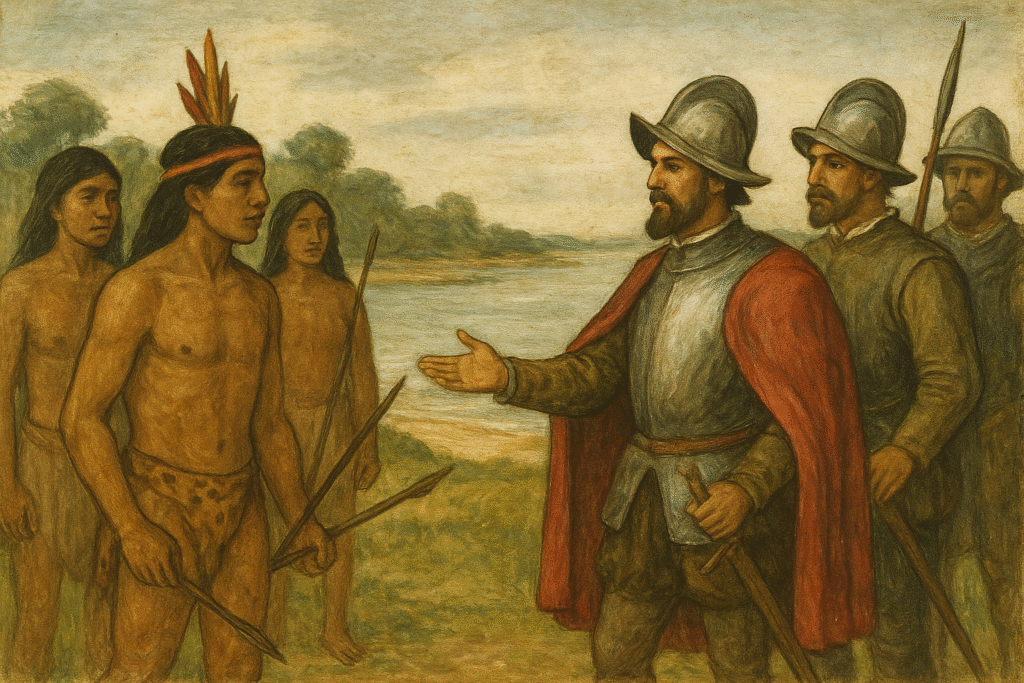
Introduction Explore the history of Portuguese treatment of natives in Brazil. When the Portuguese first arrived on the land that’s now Brazil in 1500, they encountered many indigenous peoples, who had lived there for thousands of years with rich cultures, languages, and social systems. The Portuguese-Indian contact was complex. Sometimes there were trade and cooperation; often there was conflict, violence, forced labor, and disease. This article examines the Portuguese treatment of natives in Brazil over the colonial period: the early encounters, the institutions that shaped relationships, the abuses and resistance, and the long-term impacts. It aims to provide a balanced view, recognizing not only wrongdoing but also the resilience and agency of indigenous communities. Early Contacts and First Encounters Enslavement, Forced Labor, and Violence Institutional Laws, Reforms, and Missions Resistance, Uprisings, and Indigenous Agency Everyday Life for Natives under Colonial Rule Long-Term Impacts and Legacy Reflections: Was Everything Bad? While much of the history involves suffering, violence, and injustice, the full picture is nuanced: Example and Case Studies about Portuguese treatment of natives in Brazil Why Understand about Portuguese treatment of natives in Brazil Conclusion about Portuguese treatment of natives in Brazil The treatment of native peoples by the Portuguese in Brazil presents a complex story. It involved trade and early cooperation; however, it also brought enslavement, violence, displacement, and cultural suppression. Over time, colonial authorities and missionaries imposed European customs and Christian norms, attempting to reshape indigenous life. Even so, indigenous peoples resisted, adapted, and survived, proving their resilience across centuries. Today, recognizing this history remains essential. We do so not only to dwell in guilt but also to foster understanding, promote reflection, and take responsibility for the past. Consequently, Brazil must continue to pursue justice through land demarcation, cultural rights, fair treatment, and reparation. Moreover, these actions help strengthen the country’s democratic values and reinforce respect for human diversity. Ultimately, this story is not merely about how the Portuguese treated native peoples; instead, it reveals how Brazil was shaped, how its history evolved, and how indigenous communities continue to enrich its national identity. Portuguese treatment of natives in Brazil – online Sources

The best Portuguese language teaching website

CONTACT
COURSES

Copyright © 2025 Portuguese Native. All rights reserved.

PortugueseNative 💬
Hi 👋 Thanks for your message! We\'ll get back to you soon.
💬