Definite and Indefinite Articles: Master Portuguese

What are articles and their function in the Portuguese language? Definite and Indefinite Articles are essential word classes in the Portuguese language, preceding nouns to determine or make their reference indeterminate. They agree in gender (masculine/feminine) and number (singular/plural) with the noun they refer to, playing a crucial role in the clarity and precision of communication. Understanding the function of articles is fundamental for anyone wishing to master Portuguese, whether for formal writing, everyday conversation, or proficiency exams. They help us identify whether we are talking about something specific or something generic, directly impacting the meaning of sentences. There are two main categories: definite articles and indefinite articles, each with its own rules and contexts of use. In this comprehensive guide, we will explore each type of article in depth, providing practical examples and valuable tips so that you can use them confidently and correctly. Understanding the distinction between a definite and an indefinite article is a giant step towards fluency and grammatical accuracy. Definite Articles: Usage, Examples, and Essential Rules Definite articles are used to indicate a specific noun, known to both the speaker and the listener. In Portuguese, they are: o, a, os, as. Their main function is to particularize the noun, making it unique in that context. For example, when saying “o livro” (the book), we are referring to a specific book that has already been mentioned or that is common knowledge. Agreement is a golden rule: the definite article must always agree in gender and number with the noun. If the noun is feminine singular, the article will be “a”; if it is masculine plural, it will be “os”. Let’s look at some clear examples: O carro (masculine singular) A casa (feminine singular) Os meninos (masculine plural) As meninas (plural feminine) The main contractions are: De + o/a/os/as = do, da, dos, das (Ex: Maria’s book) Em + o/a/os/as = no, na, nos, nas (Ex: He is in the office) Por + o/a/os/as = pelo, pela, pelos, pelas (Ex: We passed through the square) A + a/as = à, às (contraction occurs when the preposition ‘a’ is joined with the article ‘a’ or ‘as’. Ex: I’m going to the beach) For example, “I bought a cake. The cake was delicious.” This usage is crucial for textual cohesion and to avoid ambiguities. In some contexts, definite articles are mandatory, such as before superlatives (“The most beautiful flower”) and before names of languages when used as nouns (“Portuguese is complex”). However, there are exceptions, for example, when the language is the direct object of verbs like ‘to speak’ or ‘to learn’ without specificity (“I speak Portuguese fluently“). Mastering definite articles requires practice and attention to the nuances of language. Indefinite Articles: When and How to Use Them Correctly Unlike definite articles, indefinite articles are used to refer to a noun in a generic, imprecise way, or when it is introduced for the first time in discourse. They indicate that the noun is any example of its kind, not a specific one. In Portuguese, the indefinite articles are: um, uma, uns, umas. Like definite articles, indefinite articles also agree in gender and number with the noun. If we are talking about any object that is not known or has not been specified, we use “um” or “uma”. For example, “Eu vi um filhote na rua” – any puppy, not a particular one. If we said “Vi o cachorro na rua”, this would imply that both the speaker and the listener know which dog is being referred to. Observe the agreement in the following examples: A book (masculine singular) A pen (feminine singular) Some friends (masculine plural) Some flowers (feminine plural) For example, “A new student arrived in the class.” This transition from the indefinite to the definite is a fundamental mechanism of textual cohesion in Portuguese. For example, “I need a few days off” (a few days, not an exact amount). It is crucial to understand the difference in meaning that the use of a definite or indefinite article can generate. “I bought the car” means I bought that specific car that you and I know. In contrast to definite articles, indefinite articles do not contract with prepositions in the same way. Clarity in the use of these articles is an indication of proficiency in the language and avoids misunderstandings. Practice identifying when a noun is generic or specific to make the correct choice. Common Challenges and Tips to Avoid Making Mistakes Again Although they may seem simple, definite and indefinite articles can present challenges for learners and even native speakers, especially in more complex situations or regional variations. A common mistake is the inappropriate omission of the article, or its excessive use where it is not necessary. Both forms are acceptable, but preference varies culturally. Another point of attention is the use of the article before possessive pronouns. Although it is generally optional (“Minha casa” or “A minha casa”), the presence of the article can give a more formal or emphatic tone to the sentence. To solidify your knowledge of definite and indefinite articles, consider the following tips: Read extensively in Portuguese: Constant exposure to the language helps internalize the correct use of articles in different contexts. Pay attention to how writers use them. Practice writing: Write sentences and paragraphs, paying attention to the choice between a definite and an indefinite article. Ask a native speaker or teacher to review your text. Do specific exercises: Look for fill-in-the-blank exercises that require choosing the correct article. This reinforces the rules and exceptions. Create your own examples: Think about objects and situations from your daily life and try to form sentences using both definite and indefinite articles to describe them. Observe the context: Always analyze whether the noun has already been mentioned, whether it is known to everyone, or whether it is being introduced for the first time. This is key to the decision. Mastering articles is a fundamental step towards achieving fluency and accuracy in the Portuguese language.
Learn 5 phrases in Portuguese to impress native speakers

Phrases in Portuguese is more than memorising vocabulary and grammar rules. It is also about connecting with people in a natural and authentic way. When you use expressions that Portuguese speakers use daily, you immediately stand out. Even with a basic level, using just a few key phrases can create a powerful impression. In this article, you will learn five essential Phrases in Portuguese that instantly impress native speakers. These phrases are simple, practical and easy to use in real conversations. More importantly, they show that you are learning the language with curiosity, confidence and cultural awareness. Let’s explore each phrases in Portuguese, understand when use and why it leaves such a positive impact 1. “Não faz mal.” — It’s okay / No problem This phrase is short, friendly and very commonly used in Portugal. Natives use it every day, especially in polite or slightly uncomfortable situations. Instead of saying a direct “it’s fine”, Portuguese speakers prefer “não faz mal”, which literally means it does no harm. Why learn phrases in Portuguese impresses natives Because it sounds incredibly natural.When you use it, people immediately notice you understand the tone and rhythm of the language. When to use it Example A: Desculpa, pensei que ias descer.B: Não faz mal! Simple. Polite. Native-like. 2. “É na boa.” — It’s all good / Don’t worry about it “É na boa” is a very natural and relaxed expression. You will often hear it among friends, colleagues or young adults. It is informal, but perfect for everyday interactions. Why this phrases in Portuguese impresses natives Because it shows you recognise informal register.Most learners speak either too formally or too literally. Using “é na boa” demonstrates cultural fluency. When to use it Example A: Posso enviar-te isso amanhã?B: Sim, é na boa! 3. “Deixa comigo.” — Leave it to me / I’ll handle it This expression is common in both Portugal and Brazil, and it shows confidence. It is helpful in work situations, customer service moments, group projects or domestic conversations. Why it impresses natives Because it sounds proactive and natural.Natives often use short commands instead of long explanations. Saying “deixa comigo” is quick, direct and very Portuguese. When to use it Example A: Quem trata da reserva do restaurante?B: Deixa comigo. 4. “Pois…” — A uniquely Portuguese way to agree “Pois” is difficult to translate because its meaning changes depending on the tone. It can mean “yes”, “indeed”, “exactly”, “right” or even express doubt. Mastering this little word impresses natives immediately. Why it impresses natives Because it is one of the most Portuguese words ever.Foreigners almost never use it correctly, so when you do, people pay attention. When to use it Examples A: O trânsito hoje está horrível.B: Pois… A: Ele não veio à reunião.B: Pois, já me disseram. This single word shows deep cultural awareness. 5. “Que giro!” — How cute! / How nice! In Portugal, “giro” means cute, lovely, nice or cool. It is a very popular expression, especially when reacting to something pleasant. Why it impresses natives Because the word is uniquely Portuguese (not used in Brazil with the same meaning).Using it shows you are learning European Portuguese, not generic Portuguese. When to use Phrases in Portuguese Example A: Olha esta foto do meu cão.B: Ah, que giro! How These Phrases in Portuguese Help You Sound Native Speaking a language is not only about vocabulary. It is also about rhythm, tone and cultural expression. These five phrases help you: When you use expressions that natives use daily, you stop sounding robotic and start sounding real. Tips to Use These Phrases in Portuguese Correctly To make the most of them: Consistency is key. The more you use them, the more natural your Portuguese becomes.
Discover How Emotional Education

Dircover how emotional education has become one of the most powerful tools in modern learning. Whether you are teaching Portuguese to beginners or helping advanced learners sound more natural, emotions play a crucial role in how people absorb, remember, and apply new knowledge. For learners who want to speak confidently, emotional awareness can be the missing piece that unlocks fluency and motivation. In this article, you will discover how emotional education enhances language learning, how it supports Portuguese learners at different levels, and why platforms like Portuguese Native place special emphasis on emotional connection inside the learning process. What Is Emotional Education? Dircover how emotional education refers to the development of skills such as: These skills are essential in everyday life, but surprisingly, they are also fundamental in language acquisition. When students feel emotionally safe, confident, and motivated, their brain absorbs new information more deeply. This is why emotional intelligence (EI) is now widely recognised as a key element in modern teaching methodologies. Why Emotional Education Matters in Language Learning Learning a new language is not only a cognitive task—it is also an emotional journey. Students face fears such as: Emotional education helps learners break these psychological barriers. Instead of avoiding challenges, they learn to embrace the process and celebrate progress. This approach increases motivation, improves speaking performance, and creates a healthier relationship with learning. Emotions and the Brain: Why You Learn Faster When You Feel Better Scientific research shows that positive emotions stimulate areas of the brain responsible for: When learners feel anxious or stressed, these areas are blocked, reducing their ability to understand grammar rules, memorise vocabulary, or practise pronunciation. On the other hand, emotional safety encourages students to participate actively, make mistakes without fear, and engage with the material more naturally. This is especially important for learners of Portuguese, a language that includes nuances like ser vs estar, gender agreement, irregular verbs, and pronunciation challenges. How Emotional Education Helps Learners of Portuguese 1. Increases Confidence to Speak Many students understand Portuguese but are afraid to speak. Emotional education teaches them how to manage fear and shift to a growth mindset. 2. Encourages Consistency Emotional regulation helps learners create habits, practise daily, and stay motivated over long periods. 3. Improves Memory and Dircover how emotional education Emotionally meaningful experiences strengthen long-term memory, making vocabulary and expressions easier to retain. 4. Reduces Anxiety During Grammar Learning Topics like verb conjugations, past tenses, and the difference between ser and estar become less intimidating when students feel mentally prepared. 5. Helps Students Connect Culturally Understanding emotions also helps learners interpret tones, behaviours, and cultural expressions used by native speakers. Practical Ways to Apply Emotional Education When Learning Portuguese 1. Set Emotional Goals Instead of only focusing on grammar, include goals like: 2. Use Encouraging Self-Talk Replace “I’m terrible at languages” with: 3. Practise Mindfulness Before Lessons A simple breathing exercise increases focus and reduces nervousness. 4. Celebrate Small Wins Recognise progress such as: 5. Communicate With Emotionally Aware Teachers A supportive teacher creates a safe environment where students feel comfortable trying, failing, and trying again. See more: Why Learning Portuguese Opens More Doors Than You Think Why the Portuguese Native Community Embraces Emotional Education At Portuguese Native, the learning experience combines language instruction with emotional awareness. Students benefit from: This method helps learners develop not just knowledge—but also emotional strength and resilience. Final Thoughts about Dircover how emotional education Emotional education is not just an abstract concept—it is a practical, powerful tool that transforms the language-learning experience. When students learn to understand their emotions, they speak with more confidence, practise more consistently, and enjoy the process. For anyone learning Portuguese, integrating emotional intelligence into your study routine can accelerate progress and create a more meaningful, human connection with the language.
Learn to Speak Portuguese with Confidence

Learn to Speak Portuguese with Confidence – Why Learning Portuguese Is a Life-Changing Experience? There are languages you study… and there are languages you feel. Portuguese belongs to the second group.It’s a language filled with emotion, rhythm, and stories — one that instantly connects you with people, places, and passions across the world. Spoken by more than 260 million people, Portuguese is the official language of nine countries, each with its own accent, traditions, and expressions. From Lisbon’s calm elegance to Rio’s joyful melodies, learning Portuguese allows you to explore not only a language but an entire world of culture. The First Step: Learn to Speak Portuguese with Confidence Many learners make the same mistake at the beginning — they wait until they “know enough” to start speaking. But fluency doesn’t come from waiting. It comes from doing. When you start learning Portuguese, focus on communication, not perfection. Don’t be afraid of mistakes — they are proof that you’re growing.Native speakers appreciate effort, and they’ll often help you find the right words. The faster you start speaking, the faster you’ll start thinking in Portuguese. Learn from Native Speakers — Your Shortcut to Fluency If your goal is to sound natural, learning from native speakers is essential.Native teachers help you understand not only the words, but the emotions and rhythm behind them. At Portuguese Native, all classes are taught by certified native tutors who focus on real communication, not memorisation. You’ll learn how people actually speak in Lisbon, Porto, or São Paulo — how they greet each other, express emotions, and use idioms that don’t appear in textbooks. This immersion-based learning style helps you build authentic pronunciation and cultural awareness from day one. The Secret Ingredient: Learn to Speak Portuguese with Confidence Fluency begins with your ears.When you listen to Portuguese daily, your brain starts recognising rhythm, sounds, and patterns naturally. Spend at least 15 minutes a day listening to native content — podcasts, audiobooks, or even songs. Don’t worry if you don’t understand every word at first. What matters is exposing your mind to the melody of the language. Soon, you’ll begin to anticipate what comes next — that’s how your brain starts to think in Portuguese. Build Confidence Through Daily Practice Speaking Portuguese confidently doesn’t happen overnight — but a few minutes of daily practice can change everything. Here’s a simple plan you can follow: Consistency is more important than duration. Ten focused minutes daily are worth more than two hours once a week. Embrace the Culture — Not Just the Grammar Grammar matters, but culture gives the language life. To sound like a native, you must also understand how Portuguese speakers feel and think.Watch movies, follow local influencers, cook traditional dishes, and learn about customs from Portugal or Brazil. When you connect with the culture, your vocabulary grows naturally — and your pronunciation begins to mirror the way natives express emotion. Language is not only about what you say, but how you say it. Why Portuguese Is Easier Than You Think Many learners believe Portuguese is difficult. The truth? It’s one of the easiest Romance languages for English or Spanish speakers to learn. The grammar is logical, pronunciation is consistent, and many words are similar to other European languages. For example: If you already speak another Latin-based language, Portuguese will feel familiar — like meeting an old friend who speaks in a new rhythm. Your Path to Fluency Starts Today Fluency is not just a goal — it’s a journey filled with discovery. Each new word brings you closer to people, culture, and confidence. With the right guidance, you can start speaking Portuguese naturally within weeks. At Portuguese Native, you’ll find: If you’ve ever dreamed of speaking a new language with elegance and emotion, Portuguese is waiting for you. Final Thoughts about Learn to Speak Portuguese with Confidence Portuguese is more than a language — it’s a bridge between cultures, a melody that invites connection, and a skill that can change your life. Start small, stay consistent, and surround yourself with Portuguese every day.Soon, you won’t just understand the words — you’ll feel them. Because when you learn with passion and practice with natives, you don’t just learn Portuguese…You learn to speak it with confidence, heart, and soul.
Master Portuguese Naturally Through Culture

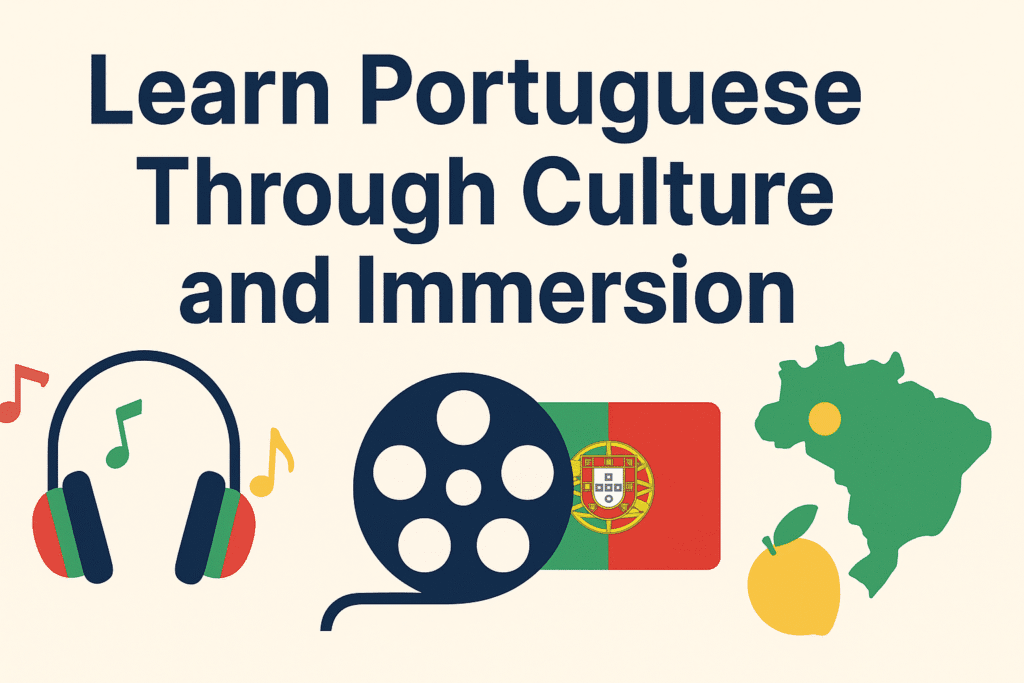
Master Portuguese Through Culture – Discover why learning through real Portuguese culture, not just grammar rules, transforms the way you speak Why Culture Is the Missing Piece in Your Portuguese Journey Master Portuguese Through Culture, Many learners start studying Portuguese with apps, grammar books, and vocabulary lists — and yet, months later, they still can’t hold a conversation. Why? Because language is not just words. It’s culture. If you want to sound natural, confident, and connected, you need to live the language, not just memorize it. That’s where cultural immersion — through music, films, stories, and traditions — changes everything. At PortugueseNative.com, we believe that true fluency happens when you understand not just what to say, but how and why native speakers say it. What “Learning Portuguese Through Culture” Really Means To learn Portuguese through culture and immersion is to experience the language as part of daily life. Instead of isolating words on a page, you encounter them in music, film, conversation, and traditions. Immersion isn’t only about travel (though that helps!). It’s about connecting with culture — even from your home. You can: Every time you experience the language in context, your brain builds deeper associations between sound, meaning, and emotion. To experience this, start exploring authentic resources like: Learn Portuguese Through Music Music is one of the most powerful cultural tools for language learning. Brazilian and Portuguese songs expose you to pronunciation, rhythm, and colloquial expressions that textbooks never teach. Example artists to explore: 🎧 Image suggestion: A vibrant illustration of headphones, Brazilian flag colors, and musical notes.Alt text: “Learn Portuguese through culture and immersion using Brazilian music.” When you sing along, your pronunciation and memory improve naturally. You internalize grammar patterns, build vocabulary, and strengthen your listening comprehension without effort. Learn Portuguese Through Movies and Series Films are another window into cultural immersion. Watching Brazilian or Portuguese productions allows you to observe accents, gestures, and cultural nuances that define the language. Recommended movies and series: While watching, keep subtitles on in Portuguese (not English). This keeps your brain immersed in the language. Repetition is key: rewatch scenes, mimic dialogue, and note idiomatic phrases. You can explore more of these unique words and cultural nuances in our feature on Vocal Media: “10 Beautiful Portuguese Words You Can’t Translate into English. Cultural Immersion Builds True Fluency) Why does learning Portuguese through culture and immersion work better than traditional study? Because it replicates how your brain naturally learns languages — through pattern recognition and emotional connection. When you learn through culture: Unlike rote memorization, immersion involves the heart as much as the mind. You stop studying and start living the language. Real-Life Practice: The Key to Retention Even if you can’t live in Portugal or Brazil, you can recreate immersion digitally.Here are practical ways to learn Portuguese through culture and immersion daily: Travel virtually.Watch travel vlogs or documentaries about Portuguese-speaking destinations. Change your phone and apps to Portuguese.You’ll learn dozens of new words each day. Join language exchange groups online.Try Tandem or HelloTalk. Follow blogs and creators like Portuguese Native for real examples. Cook Portuguese or Brazilian recipes.Reading and following recipes in Portuguese builds real-world vocabulary. How You Can Start Today By combining culture, structure, and consistent practice, you’ll speak Portuguese faster — and enjoy the process. Subtle Grammar and Pronunciation Gains When you learn Portuguese through culture and immersion, grammar becomes natural. You start noticing how sentences are formed in real conversations or songs.For example, after hearing “Eu vou te ligar mais tarde” (I’ll call you later) repeatedly in a song, you subconsciously understand object placement rules without memorizing them. Similarly, pronunciation improves through exposure. By listening to authentic Portuguese daily, your ear adjusts to sounds like “lh” (melho), “ão” (pão), or “r” (carro). Why Traditional Study Alone Isn’t Enough Memorizing rules and vocabulary lists has value—but only when paired with culture. Traditional study builds awareness, but immersion builds instinct. Many learners struggle with fluency not because they lack knowledge, but because they’ve never connected emotionally to the language.Culture provides that missing piece — making every word meaningful. Start Your Journey Today – Master Portuguese Naturally Through Culture If you’re ready to learn Portuguese through culture and immersion, start small but consistent.Watch a short film, learn the lyrics to a song, or read an article from Portuguese Native. Each small interaction adds up to natural fluency — no stress, no translation, just connection. Conclusion of Master Portuguese Naturally Through Culture Learning Portuguese through culture isn’t a shortcut — it’s the natural path to fluency.The more you connect with real Portuguese life — through art, music, humor, and emotion — the easier it becomes to express yourself with confidence and authenticity. So next time you open your textbook, balance it with a little rhythm, cinema, or poetry.Because the secret to fluency isn’t just study — it’s immersion. 👉 Explore lessons and resources at Portuguesenative.com and start living the language today.
Portuguese Alphabet: Exploring the 26 Letters
Introduction to the Portuguese Alphabet The Portuguese alphabet forms the foundation of the Portuguese language. It includes 26 letters that shape the way Portuguese speakers read, write, and communicate. Closely related to the Latin script, the alphabet has evolved over time, reflecting the cultural and historical roots of Portuguese-speaking countries. Each letter plays a role in creating meaning, emotion, and identity. Understanding how these letters work helps learners connect with the richness of Portuguese as spoken in Portugal, Brazil, Angola, and beyond. Origins and Structure of the Portuguese Alphabet The Portuguese alphabet comes from Latin, adapted to fit the sounds of Portuguese. It contains five vowels (A, E, I, O, U) and 21 consonants. Each letter influences pronunciation and meaning, making phonetics a key part of mastering Portuguese. In addition, diacritics—such as accents and the tilde—expand the alphabet’s versatility. They mark stress, tone, and nasalization, helping distinguish words across regions and dialects. The Role of the Alphabet in Culture and Communication The alphabet connects millions of Portuguese speakers across continents. Beyond writing, it carries stories, traditions, and identity. From Brazilian songs to Angolan poetry, each letter helps preserve and transmit cultural heritage. Mastering the alphabet is more than a linguistic goal—it’s a gateway to understanding the culture and history behind the language. The Portuguese Alphabet: Letter by Letter The alphabet includes 26 letters. Many resemble English letters, but some have different pronunciations. Letter Example Sound A “amor” like “ah” B “bola” like “b” in bat C “casa”, “cidade” /k/ or /s/ D “dia” same as English E “escola” /e/ or /ɛ/ G “gato”, “gente” /g/ or /ʒ/ H “homem” silent J “jogo” /ʒ/ (as in “measure”) L “livro” soft “l” R “rato”, “caro” guttural or soft, varies by region S “sala”, “casa” /s/ or /z/ X “xícara”, “tóxico” /ʃ/, /ks/, /z/, or /s/ These examples show how the alphabet blends simplicity with complexity, offering both familiar and unique sounds. Vowels and Their Variations The five vowels—A, E, I, O, U—are essential in shaping pronunciation. A: Sounds like ah in “casa” (house). E: Can sound like eh or ay, depending on context. I: Sounds like ee in “cima” (above). O: May sound like oh or aw. U: Sounds like oo in “luz” (light). Accents, such as á, é, ó, or ú, indicate stress and help distinguish meanings. Understanding Portuguese Consonants Portuguese uses 21 consonants, many of which mirror English sounds. However, some combinations produce unique results. “Ch” sounds like “sh” in “ship.” “Nh” resembles “ny” in “canyon.” “Lh” sounds like “ly” in “million.” Recognizing these patterns helps learners improve pronunciation and comprehension. Diacritics and Special Characters Portuguese uses several diacritics that alter pronunciation and meaning: Tilde (~): Nasalizes vowels, as in pão (bread). Acute accent (´): Marks stress, as in pé (foot). Circumflex (ˆ): Indicates a closed vowel, as in você. Cedilla (ç): Softens c to /s/, as in coração (heart). Grave accent (`): Signals contraction, as in à (to the). Understanding these symbols is crucial for reading and writing Portuguese correctly. Common Mistakes Learners Make Many learners struggle with pronunciation and diacritics. The most frequent errors include: Mispronouncing “ç” and “j”. Ignoring silent letters like “h.” Skipping accents, which can change meaning. Regular listening practice and speaking with native speakers can help overcome these challenges. The Alphabet in Everyday Words Letters appear in familiar words that learners can easily recognize: A – amor (love) B – bom (good) C – cidade (city) D – dia (day) M – mundo (world) O – olho (eye) Practicing with such examples strengthens memory and fluency. The Alphabet’s Cultural Importance The alphabet shapes art, literature, and music in Portuguese-speaking cultures. Writers like Fernando Pessoa and Jorge Amado used it to craft timeless works. In music, genres such as Fado and Samba depend on rhythmic wordplay rooted in the alphabet’s sounds. It also plays a vital role in oral traditions, helping preserve folklore and storytelling for future generations. Final Thoughts: Why the Portuguese Alphabet Matters The Portuguese alphabet is the key to unlocking communication, culture, and connection. Every letter builds a bridge between countries and people. Learning it empowers students to pronounce correctly, understand native speakers, and appreciate the diversity of the Lusophone world. For anyone beginning their journey in Portuguese, mastering the alphabet is the first—and most important—step toward fluency.
Learn Portuguese Online Courses 2025

The Importance of Learning Portuguese in Today’s Global Landscape In an increasingly interconnected world, Learn Portuguese has become essential for those seeking to broaden their horizons, both personally and professionally. As one of the most spoken languages globally, with over 250 million native speakers, Portuguese ranks as the sixth most spoken language and is the official language of nine countries, including Portugal, Brazil, and several African nations such as Mozambique and Angola. This widespread usage underscores the language’s cultural and economic significance. The cultural relevance of Portuguese extends beyond just the nations where it is spoken. With a rich literary tradition, vibrant music, and a diverse range of art, Learn Portuguese enhances access to a wealth of cultural experiences. For instance, Brazil is renowned for its Carnival, samba, and literary contributions, while Portugal boasts a history characterized by exploration and artistry. Engaging with these cultures through language fosters deeper connections and appreciation, enriching one’s personal growth. From an economic perspective, Portuguese presents numerous opportunities, particularly in emerging markets. Brazil, as the largest economy in Latin America, offers considerable prospects for business, trade, and investment. Moreover, the economic growth of African Portuguese-speaking countries has been noteworthy, attracting foreign investments and enhancing trade partnerships. Learn Portuguese, therefore, equips individuals with a competitive edge in the job market, especially for careers in international business, tourism, and diplomacy. Furthermore, as globalization continues to shape economies and societies, multilingualism has become a vital skill. Proficiency in Portuguese opens up professional avenues in various fields, including healthcare, education, and technology. In summary, the importance of Learn Portuguese in today’s global landscape is underscored by its cultural richness, expanding economic opportunities, and the increasing demand for multilingual professionals. Embracing the language not only aids personal development but also enhances career prospects in a diverse and dynamic world. Benefits of Online Courses with Live Classes Enrolling in for learn Portuguese online courses that offer live classes with Preply and Portuguese native presents numerous advantages that can significantly enhance the learning experience. One of the most notable benefits is the real-time interaction these courses provide. Students can engage directly with instructors and classmates, facilitating dynamic discussions that deepen understanding and retention of the language. This immediate communication fosters a sense of community, reducing the isolation often felt in self-paced learning environments. Additionally, the availability of live classes allows for immediate feedback, enabling learners to address mistakes and clarify doubts on the spot. This instant response is invaluable for language acquisition, as it helps reinforce correct pronunciation and usage in a supportive setting. Furthermore, when students receive prompt feedback from instructors, they can adjust their study techniques to suit their learning style better, ultimately leading to more efficient mastery of Portuguese. The flexibility offered by online courses with live classes is another advantage that appeals to many learners. With varying schedules and commitments, the option to attend classes from home eliminates the need for travel and provides a convenient way to fit learning into busy lifestyles. Students can choose class times that best suit their availability, making it easier to balance work, study, and personal obligations. Moreover, the element of live interaction inherently enhances motivation and engagement. When students join a class, they participate in a learning environment that encourages collaboration and shared experiences. Top Online Portuguese Courses for 2025 As the demand for learning Portuguese continues to grow, several online platforms have emerged, offering live classes tailored to different proficiency levels. When choosing the best online courses for 2025, it is essential to evaluate various factors such as course offerings, teaching styles, accreditation, and pricing. Below, we provide a comparison of leading platforms that cater to a diverse range of learners. One of the most prominent players in this space is Rosetta Stone, known for its immersive teaching style which encourages conversational proficiency right from the start. This platform incorporates speech recognition technology to assist learners in mastering pronunciation. Furthermore, their courses come with a flexible subscription model that can accommodate beginners to advanced speakers. Babel is another excellent choice for those seeking structured lessons. The platform prioritizes interactive content and cultural insights, appealing to learners interested in understanding language nuances. Its comprehensive curriculum is designed for beginners, with engaging features such as podcasts and quizzes that foster an effective learning environment. For more academic-focused learners, Coursera offers courses developed by reputable universities, providing a more formal approach to language acquisition. These courses often include accreditation upon completion, making them ideal for professionals looking to enhance their resumes. The pricing varies depending on the institution but often includes financial aid options. italki stands out for its flexibility and personalized learning experiences. This model is suitable for intermediate and advanced learners aiming to refine their conversational skills. The combination of these platforms provides a wide array of choices based on individual needs. Whether you are a beginner seeking foundational knowledge or an advanced learner looking to enhance fluency, the online Portuguese courses available in 2025 cater to diverse learning styles and objectives. Tips for Successfully Learn Portuguese Online Learning Portuguese online, especially through live classes, can be an enriching experience if approached thoughtfully. To maximize success in your online Portuguese course, consider creating a nurturing and distraction-free learning environment. This can be achieved by designating a specific space in your home for study, free from noise and interruptions. Having a well-organized area with the necessary materials easily accessible can enhance focus and concentration. Setting achievable goals is another crucial aspect of online learning. Break your language acquisition into manageable milestones, such as mastering basic greetings, common phrases, or grammatical structures. By keeping your goals realistic, you’ll find motivation in reaching each milestone while gradually building your proficiency in Portuguese. Regular reflections on your progress can foster a sense of accomplishment and keep you motivated throughout your learning journey. Consistency in practice is vital when learning Portuguese. Dedicate a set amount of time each day or week to your language studies, regardless of the course format. Regular practice reinforces new
Unlocking the Beauty of Portuguese: Your Essential Lexicon Guide
Learn Portuguese with the Essential Portuguese Lexicon Introduction If you want to learn Portuguese, the Essential Portuguese Lexicon is the ideal resource to start your journey. More than a simple vocabulary list, this lexicon integrates cultural context, linguistic nuances, and practical usage to make language learning engaging and effective. To truly learn Portuguese, one must not only memorize words but also embrace the customs, expressions, and traditions that reflect the rich culture of Portuguese-speaking countries. As language learners often face the challenge of feeling overwhelmed by vocabulary, the Essential Portuguese Lexicon aims to demystify this process. By systematically categorizing words into themes—such as greetings, food, travel, and emotions—learners can focus on the most relevant vocabulary for their immediate needs. This targeted approach not only fosters retention but also encourages practical application in everyday scenarios. The lexicon highlights essential phrases used in various regions, thus providing learners with insights into regional dialects and local expressions. The accessibility of the Essential Portuguese Lexicon makes it a user-friendly tool for learners at all levels, whether beginners or those seeking to refine their skills. With an emphasis on engagement, the lexicon incorporates interactive elements to foster active learning. Language can often seem daunting, yet this lexicon brings forth the excitement of mastering Portuguese. As each new word is learned, users can simultaneously immerse themselves in the culture behind the language, making each lesson more meaningful. In fostering a deeper understanding of Portuguese, learners will find themselves not only expanding their vocabulary but also appreciating the cultural significance behind the words they learn. This comprehensive guide invites readers to unlock not just the language, but the beauty and vibrancy of Portuguese-speaking cultures along the way. Why Learn Portuguese? Benefits and Opportunities Learning Portuguese provides numerous opportunities for personal growth, travel, and professional advancement. With over 260 million speakers worldwide, Portuguese is the sixth most spoken language and is official in countries such as Brazil, Portugal, Angola, and Mozambique. Career opportunities: Many global companies value employees who can communicate in Portuguese, especially in growing markets like Brazil. Cultural access: By learning Portuguese, you gain access to unique literature, cinema, and music. Travel advantages: Speaking the language makes exploring Lisbon, Rio de Janeiro, or Luanda far more rewarding. 👉 Want to explore grammar lessons? Check out ours classes: Portuguese verb conjugation. Structure and Features of the Essential Portuguese Lexicon To help learners learn Portuguese more effectively, the lexicon is organized into three sections: Everyday Vocabulary (H3 with keyphrase synonym) Words for greetings, numbers, food, and travel to build a strong foundation. Essential Phrases to Learn Portuguese (H3 optimized) Practical expressions for travel, social situations, and emergencies. Cultural Notes for Portuguese Learners (H3 optimized) Getting Started: Tips to Learn Portuguese Effectively To make the most of the Essential Portuguese Lexicon: Set goals – Decide whether you want to focus on basic conversations or fluency. Practice pronunciation – Use podcasts, YouTube channels, and apps like Duolingo. Use multimedia – Watch Portuguese movies, listen to Brazilian music, or follow native speakers on social media. Integrate daily practice – Label household objects in Portuguese or keep a daily language journal. Explore our resource: Beginner’s guide to Portuguese pronunciation. Conclusion The Essential Portuguese Lexicon is more than a dictionary; it’s a complete guide to help you learn Portuguese with confidence. By combining vocabulary, essential phrases, and cultural insights, this tool empowers learners to build fluency and truly connect with the Portuguese-speaking world. Whether your goal is travel, career, or personal growth, learning Portuguese will enrich your life in countless ways.